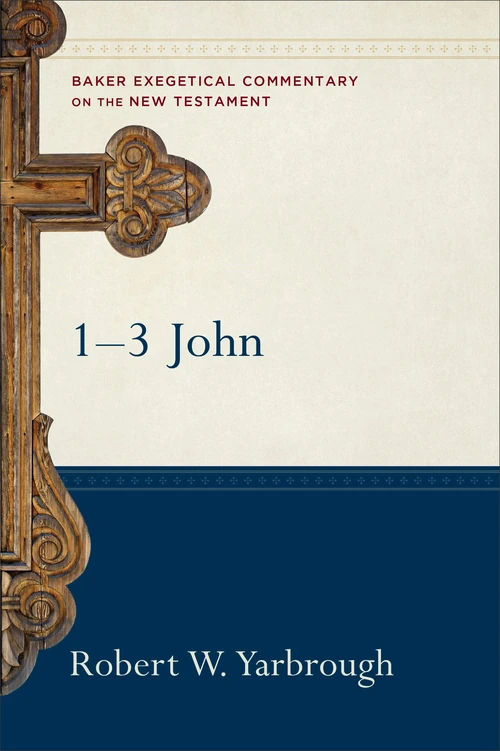
1-3 John
- Biblical Studies & Commentaries
- Publisher: Baker Academic (Baker Publishing Group)
- Published: 2008
FritzSearch.com earns a commission on purchases made through Bookshop.org links.
Publisher's Description
Find academic sophistication, pastoral sensitivity, and accessibility in the award-winning BECNT seriesRobert Yarbrough, coauthor of the bestselling Encountering the New Testament, offers a historical and theological commentary on the Johannine Epistles in this addition to the BECNT series. The commentary features the author's detailed interaction with the Greek text, explores the relationship between John's Epistles and Jesus's work and teaching, interacts with recent commentaries, is attentive to the history of interpretation, and seeks to relate these findings to global Christianity. As with all BECNT volumes, this informative, balanced commentary features:● Detailed interaction with the Greek text● Extensive research● Chapter-by-chapter exegesis● A blend of scholarly depth and readability● An acclaimed, user-friendly designThe BECNT series aims for academic sophistication with pastoral sensitivity and accessibility, making it a useful tool for pastors, church leaders, students, and teachers.
Endorsements (5)
“By attempting to read 1–3 John in a fresh way, uncoerced by (though not uninformed by) scholarly tradition, Yarbrough offers a helpful and often different perspective on the Johannine Epistles, some of the most interpretively complex material in the New Testament. I find especially helpful his illuminating engagement with the history of interpretation, his careful attention to textual questions, and his quite insightful appeal to the language of the Greek version of the Old Testament (the background John and his audience shared).”
“These greatly loved epistles are often only mined for spiritual sound bites. Now we have a commentary that emphasizes their great value as letters. Despite the author’s modesty, there is no other commentary like it on these epistles; it relates the Johannine Letters to aspects of Jesus’s work or teaching and brings into play ancient texts—Augustine, Luther, Calvin, Schlatter, for example—as well as the latest scholarly research. Yarbrough also writes as a seasoned scholar with a pastor’s heart and deep cross-cultural concerns. This rigorous yet very readable commentary is for students and pastors alike to guide their study and enhance their preaching.”
“The latest addition to the BECNT series by Robert Yarbrough is not narrowly exegetical but is intended to help preachers and general readers apprehend the message of 1–3 John for today. It offers a meticulously detailed study of the Greek text (including special attention to textual variants) that will provide students with ample information on every aspect of the argument of the letters. This commentary well maintains the standards that we have come to expect from this series.”
“Yarbrough’s exposition of the Johannine letters is a model of evangelical scholarship. His thorough interaction with the literature, informative treatment of the biblical text, and clarity of articulation combine to make this commentary one that anyone interested in these New Testament writings will need to consult. Moreover, at the most strategic points, he adeptly facilitates the necessary conversation between the biblical author and present-day churches. This is a significant contribution to the Baker Exegetical Commentary series!”
“Dr. Yarbrough’s fine volume on the Letters of John is a refreshing and well-crafted commentary that is marked by perceptive theological exegesis and a sensitivity to the pastoral and social dimensions of these three New Testament epistles. As he carefully grapples with important and difficult issues within these texts, Yarbrough draws on a wide range of authors from the early church to the present. I appreciate his informed discussions of the meanings and uses of Johannine terms, his overall canonical approach to these documents in his exegesis, and his concern to address the wider theological implications of the biblical text. This edifying and stimulating commentary encourages the reader to approach the text reverently and to respond positively to the word of God.”—Peter T. O’Brien, Moore College, Sydney, Australia (emeritus)”
See something wrong on this page? Report a problem