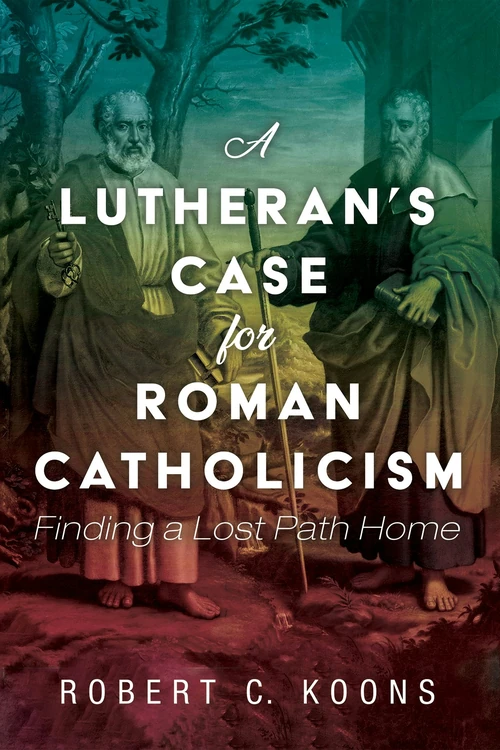
A Lutheran’s Case for Roman Catholicism
Finding a Lost Path Home
- Theology
- Publisher: Cascade Books (Wipf and Stock)
- Published: 2020
FritzSearch.com earns a commission on purchases made through Bookshop.org links.
Publisher's Description
After thirty years of study and reflection, Lutheran philosopher Robert Koons joined the Catholic Church in 2007. This book articulates his reasons for abandoning the church of his ancestors for the Roman communion, reasons that centered on a deep and systematic re-thinking of the central issue of the Reformation: the Lutheran doctrine of justification by faith alone. Koons draws on a broad knowledge of the Scriptures, the Church Fathers, and the most prominent theologians of the Lutheran movement from the time of the Reformation until the present, including Luther, Melanchthon, Chemnitz, and Robert Preus. Since Jesus clearly intended for the church to remain visibly united, the burden of proof on any theological innovation is heavy, and Koons demonstrates that the Lutheran doctrine was innovative, and he argues, relying on the best New Testament scholarship, that the Bible passages cited by the Reformers do not support the innovative features of the Lutheran doctrine. Koons seeks to eliminate widespread misunderstandings of the Catholic doctrine of justification on the part of many Protestants, emphasizing the christocentric character of that teaching. Koons argues that, in contrast, the Lutheran doctrine is inconsistent. He also points out serious logical problems with the principle of sola scriptura.
Endorsements (2)
“Most works about the quarrel of Lutherans with Catholics are written by either settled Lutherans or settled Catholics. This superb book, deeply personal yet deeply reasoned, is by a man in the middle. Koons’ burning honesty, so like Newman’s in Apologia Pro Vita Sua, is a model for all who try to understand.”
“Rob Koons’ masterful analysis leaves no stone unturned. It played a key role in my own journey to the Catholic Church. If you really want to understand the Catholic view of justification, and why Luther’s view falls short, read this book.”
See something wrong on this page? Report a problem