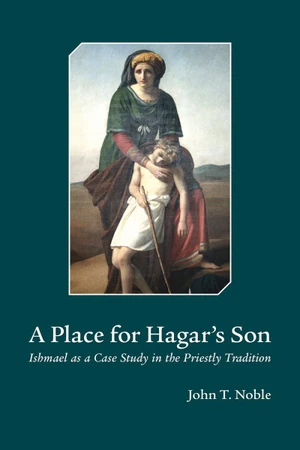
A Place for Hagar’s Son
Ishmael as a Case Study in the Priestly Tradition
- Biblical Studies & Commentaries
- Publisher: Fortress Press (Augsburg Fortress)
- Published: 2016
FritzSearch.com earns a commission on purchases made through Bookshop.org links.
Publisher's Description
The profound ambivalence of the biblical portrayals of Hagar and Ishmael—dispossessed, yet protected; abandoned, yet given promises that rival those of the covenant with Abraham—belies easy characterizations of the Pentateuch's writers. In particular, John T. Noble argues, conventional characterizations of the Priestly writers' view of covenant have failed to take into account the significance of these two "non-chosen" figures. Noble carefully examines their roles and depictions in the P and non-P Genesis traditions, comparing them to other "non-chosen" figures and to patterns found in Exodus traditions and the patriarchal promises to Abraham, showing that Ishmael is clearly favored, though not chosen. Indeed, Noble argues, Ishmael must be seen as a key figure in the Priestly material, highlighting the relationship between Noahic and Abrahamic covenants. His ambiguous status calls for reconsideration of the goals and values of the Priestly work, which Noble sketches around themes of covenant, fertility, life, and the future of nations.
Endorsements (1)
“Modern critics have generally portrayed the Priestly writers as the most narrow-minded and particularistic pentateuchal source. In this thoughtful and provocative book, John T. Noble focuses on the way Ishmael is presented in Genesis with special attention to Genesis 17 (attributed to P), revealing that the Priestly writers appear to be more theologically broad-minded toward closely related non-Israelites like Ishmael than were the earlier sources P drew upon. While Noble recognizes that P puts great emphasis on Israel's specialness, he demonstrates, contrary to current assumptions, that a deepening particularism went hand-in-hand with a broadening universalism.”
See something wrong on this page? Report a problem