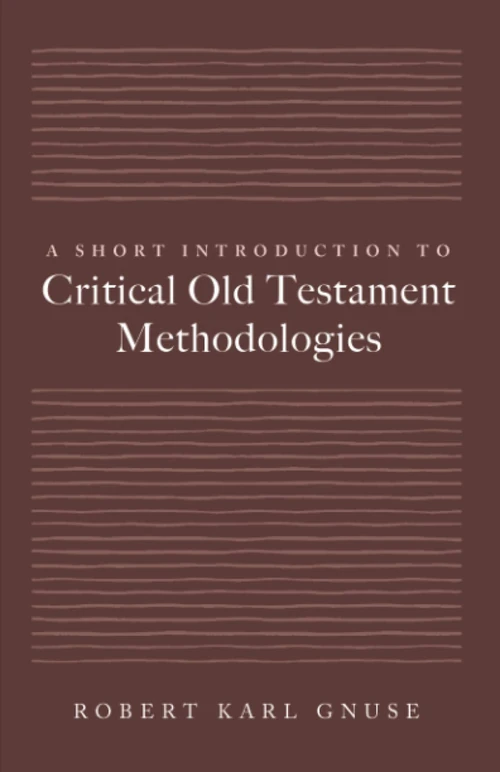
A Short Introduction to Critical Old Testament Methodologies
- Biblical Studies & Commentaries
- Publisher: Cascade Books (Wipf and Stock)
- Published: 2025
FritzSearch.com earns a commission on purchases made through Bookshop.org links.
Publisher's Description
Gnuse provides a brief summary of critical methodologies used in interpreting the Old Testament, which is most useful for students beginning their serious study of the biblical text. The traditional methods are given consideration first: text criticism, source criticism, form criticism, and traditiohistorical criticism. Structuralism is explicated in a separate chapter. Then consideration is given to the newer literary and intellectual criticisms that have developed in the past two generation: rhetorical/aesthetic criticism, narrative criticism, ideological criticism, dialogism, reader-response criticism, biblical postmodernism or poststructuralism, and biblical deconstructionism. In most chapters one or two examples are provided of the textual analysis undertaken with each methodology. This work is an excellent supplement in an introductory course in biblical exegesis.
Endorsements (2)
“This text offers a broad introduction to critical methodologies used to analyze and assess the Old Testament in a Christian context. Its vast scope, concise explanations, and lucidly written chapters combine with the author’s depth of expertise for a highly accessible book that will especially benefit students approaching scriptures for the first time.”
“Concise and engaging, this volume guides students through traditional and emerging methods of biblical criticism from three perspectives: author, audience, and text. It invites religious studies majors, seminarians, clergy, and independent scholars to set aside assumptions—including those historically used to justify exclusion or oppression—in order to engage the Bible with fresh scholarly insight. Gnuse’s accessible style makes complex concepts approachable and equips readers to navigate the field with confidence.”
See something wrong on this page? Report a problem