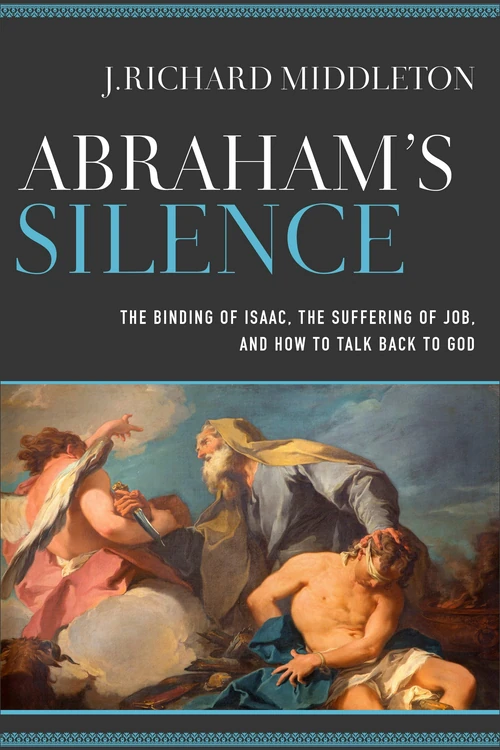
Abraham's Silence
- Biblical Studies & Commentaries
- World Religions
- Publisher: Baker Academic (Baker Publishing Group)
- Published: 2021
FritzSearch.com earns a commission on purchases made through Bookshop.org links.
Publisher's Description
It is traditional to think we should praise Abraham for his willingness to sacrifice his son as proof of his love for God. But have we misread the point of the story? Is it possible that a careful reading of Genesis 22 could reveal that God was not pleased with Abraham's silent obedience? Widely respected biblical theologian, creative thinker, and public speaker J. Richard Middleton suggests we have misread and misapplied the story of the binding of Isaac and shows that God desires something other than silent obedience in difficult times. Middleton focuses on the ethical and theological problem of Abraham's silence and explores the rich biblical tradition of vigorous prayer, including the lament psalms, as a resource for faith. Middleton also examines the book of Job in terms of God validating Job's lament as "right speech," showing how the vocal Job provides an alternative to the silent Abraham. This book provides a fresh interpretation of Genesis 22 and reinforces the church's resurgent interest in lament as an appropriate response to God.
Endorsements (6)
“What do you say to God when bad things happen? In this fascinating and insightful study of Abraham and Job, Middleton invites us to reconsider what God desires from those who are suffering. Beware! This book will change the way you think about God and transform transform your spiritual life. A must-read for every student of Scripture.”
“Generations of theologians, commentators, philosophers, writers, and artists—both Jews and Christians—struggled and are still struggling with the most puzzling and horrifying stories: the binding of Isaac (the Akedah), who is meant to be offered as a burnt offering by his father, and the suffering of Job, the ‘blameless and upright, one who feared God and turned away from evil.’ Abraham’s Silence is a stimulating and important contribution to the ongoing study of these incredible biblical texts where God ‘tests’ his most faithful servants. The author straightforwardly discusses various theological, exegetical, and rhetorical issues in these Scriptures and sheds a fresh light on them.”
“Ecclesiastes 3 famously says there is a time for everything, including ‘a time to keep silence, and a time to speak’ (3:7). In this book, Middleton invites us to ponder the silence of Abraham before God and the words of Job and other voices of protest and lament. From Middleton you can always expect penetrating exegetical insight, but the deeper value here is his case for bold and vigorous prayer in the face of suffering and pain. Middleton’s rich blend of breadth and depth makes for engaging and transformative reading.”
“Middleton brings together penetrating analysis of biblical texts, keen theological insight, and remarkable clarity of presentation. Middleton is not afraid to ask difficult, painful questions—about God, about Abraham, and about what a life of faith should look like. Whether you agree with his arguments or not, you will undoubtedly learn and grow from this provocative book.”
“Long ago ‘The Preacher’ concluded, ‘There is a time to keep silence, and a time to speak’ (Eccles. 3:7). Now Middleton, in the wake of ‘the preacher,’ wades boldly into the enigma of silence and speech. He ponders the demanding speech addressed to God by Moses, the prophets, and most especially by Job. But then he turns to Abraham’s stunning silence before God concerning the near-sacrifice of Isaac, the son whom Abraham loves. Middleton judges that Abraham’s silence means that Abraham has not fully probed God’s mercy, but settles for a God less than fully merciful. Middleton’s indictment of Abraham is a daring judgment that collides with the usual practice of the piety and prayer of the faithful, both Jews and Christians, and with the judgment of our foremost interpreters. This is interpretation at its most daring and at its best.”
“Drawing from a broad range of biblical, Jewish, and Christian traditions, Middleton argues in compelling fashion that Abraham’s silence in Genesis 22 was a failure. In so doing, Middleton more broadly makes the case for lament as an integral practice of faith in a God who welcomes chutzpah rather than blind obedience. Whether you agree or not, you will not read the Aqedah story in the same way. Or Job and the Psalms.”
See something wrong on this page? Report a problem