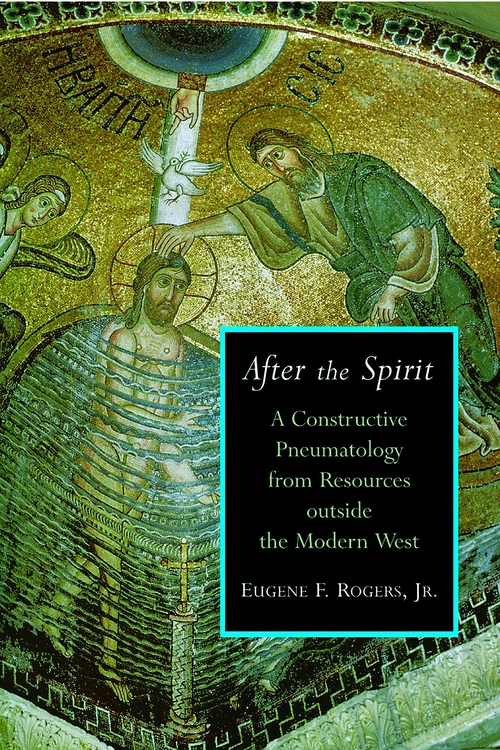
After the Spirit
- Theology
- Publisher: Eerdmans
- Published: 2005
FritzSearch.com earns a commission on purchases made through Bookshop.org links.
Publisher's Description
To think about the Spirit it will not do to think 'spiritually': to think about the Spirit you have to think materially," claims Eugene F. Rogers. The Holy Spirit, who in classical Christian discourse "pours out on all flesh," has tended in modern theology and worship to float free of bodies. The result of such disembodiment, contends Rogers, is that our talk about the Spirit has become flat and uninspiring. In After the Spirit Rogers diagnoses a related gap in the revival of trinitarian theology, a mentality that "there's nothing the Spirit can do that the Son can't do better."The Eastern Christian tradition, by contrast, has usually linked the Holy Spirit with holy places, holy people, and holy things. Weaving together a rich tapestry of sources from this tradition, Rogers locates the Spirit in the Gospel stories of the annunciation, Jesus' baptism, the transfiguration, and the resurrection. These stories offer illuminating glimpses into both the Spirit's connection with the tangible world and the Spirit's distinctive place in relation to the other persons of the Trinity. Eight gorgeous color plates complement Rogers's witty and passionate prose.
Endorsements (2)
“After the Spirit is a learned, eloquent, gracious response to the dearth of theological reflection on the Holy Spirit in the modern Christian West. If you have been wondering where the Spirit went, or what it might mean for the Spirit to befriend the body, or how Barth, Coakley, and Rahner might be brought into fruitful conversation with Bulgakov, Florensky, and Simeon the Elder, then read this book.”
“For those who have found themselves bored by the wilted spinach of recent writing on the Spirit, Rogers offers a real steak. . . Drawing on a wide range of Greek, Latin, and Syriac patristic sources, as well as engaging a fascinating variety of modern authors, Rogers shapes his theology through close readings of Scripture and tradition. In a way that we have come to expect from Rogers, tradition riffs on Scripture, and Scripture is then allowed to take up the chords of tradition and play something new that draws us back to listen again to the old. Protestant, Catholic, and Orthodox should all find something here to delight and challenge.”
See something wrong on this page? Report a problem