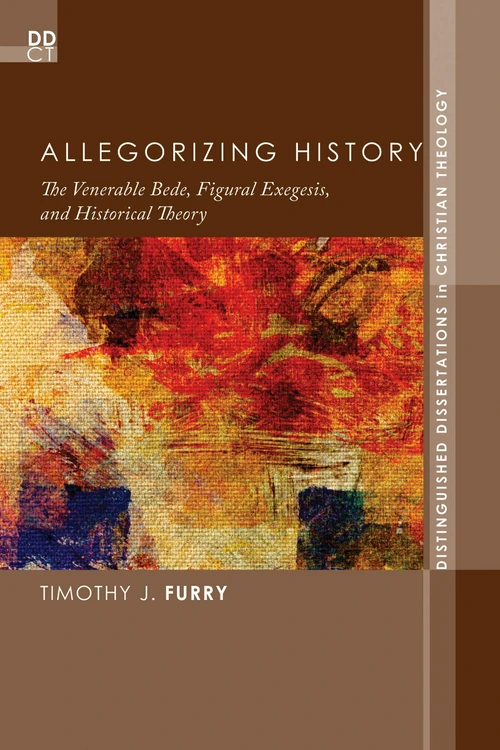
Allegorizing History
The Venerable Bede, Figural Exegesis, and Historical Theory
- Biblical Studies & Commentaries
- Theology
- Publisher: Pickwick Publications (Wipf and Stock)
- Published: 2013
FritzSearch.com earns a commission on purchases made through Bookshop.org links.
Publisher's Description
What is history and how does it impact biblical interpretation and theology? Allegorizing History seeks to begin answering this question by arguing that conceptions of the past and the purpose(s) of history impact biblical interpretation and vice versa. Furthermore, it is shown how philosophy and theology inevitably affect the understandings and practice of historical writing, thereby making all history figural or allegorical. Famous for his Ecclesiastical History of the Anglo-Saxon People and biblical commentaries, the Venerable Bede is studied in dialogue with Augustine, contemporary theology, and historical theory to make this interdisciplinary argument.
Endorsements (3)
“This is an absolutely fascinating book. . . . Timothy Furry is remarkably successful in arguing that the instruments developed by modern philosophers of history are conditional for doing adequate justice to the surprising semantic richness of a historical text of almost thirteen hundred years ago. Furry is to be congratulated for his having been the first to reveal Bede's real historical genius.”
“Through a disarmingly engaging study of the Venerable Bede, Furry provides a subtle Christian apologetic about the nature of history. Taking history back for legitimate Christian interpretation, Furry steps nimbly through scriptural exegesis, Augustinian metaphysics, medieval theology, and contemporary philosophy, despoiling the Egyptians as he goes. This is a wonderfully creative re-appropriation of the tradition, which reopens a fertile space for a Christian reading of the past.”
“Few issues are more pressing today--and more vexed--than the relation of 'history' to scriptural interpretation. . . . Relying on recent theory that moves us beyond the stale dualisms of the romantic period, Furry allows us to see Bede anew as a skillful historian and a faithful theologian. But this book is not only about Bede. It is also a fresh, hopeful plea for theological work that returns to first-order questions about what history is and why it matters.”
See something wrong on this page? Report a problem