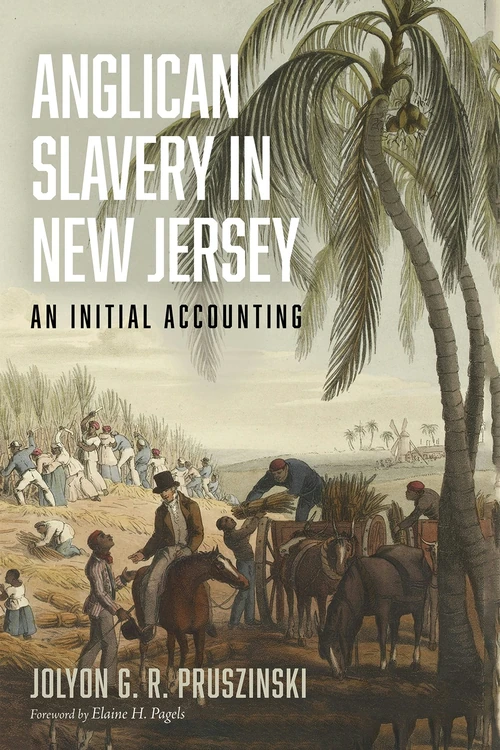
Anglican Slavery in New Jersey
An Initial Accounting
- History & Biography
- Publisher: Cascade Books (Wipf and Stock)
- Published: 2025
FritzSearch.com earns a commission on purchases made through Bookshop.org links.
Publisher's Description
As the last northern state to enact gradual abolition laws, New Jersey played a powerful role in keeping slavery alive, and Anglicans and Episcopalians were deeply involved in establishing and maintaining that slave society. Throughout the colonial era, Anglicans were some of the strongest supporters of the institution, and often the most prolific enslavers, while formal church policy encouraged evangelization of the enslaved to ensure their docility. Priests stationed in the colony sought the "more comfortable subsistence" that plantation ownership provided, and many who became the most established in New Jersey succeeded as a result of their reliance on enslaved labor. After the Revolutionary War, White Episcopalians continued to be among those most resistant to changing slavery laws, and the initiatives they supported, such as the American Colonization Society and the "Africa Mission," were highly racist. Black Episcopalians who stayed with the church during this time were marginalized through segregation and neglect, except when they were the victims of open hostility. In Anglican Slavery in New Jersey, Jolyon Pruszinski tells the neglected history that has shaped today's church, and invites any who will hear to take up the work of research, reckoning, repentance, and repair.
Endorsements (4)
“In the Diocese of New Jersey, we were intentional in ensuring that any reparations work was grounded in our comprehensive history as Episcopalians. As our historian, Jolyon fulfilled that mandate with extensive research culminating in this impressive book Anglican Slavery in New Jersey. His clarity of presentation surfaced challenging content which will critically direct our collective repentance, healing, and restitution.”
“This meticulously researched and highly accessible study is a must-read for scholars and a general church readership alike. Pruszinski’s expert and innovative account not only fills a gap in the historiography but also traces the implications of enslavement in the contemporary Episcopal Church. The author’s interpretation of Anglican slavery in New Jersey is nuanced and challenging; the scholarship is expert and evocative. This book is a model for other Anglicans exploring institutional complicity with slavery.”
“Jolyon Pruszinski’s sobering, well-researched work is timely and much needed today as the church continues to grapple with its part in the sin of slavery. While we cannot undo the incalculable harm that has been done, the Way of Love to which Jesus calls us impels us to, as the author aptly puts it, do justly and love mercy. Now.”
See something wrong on this page? Report a problem