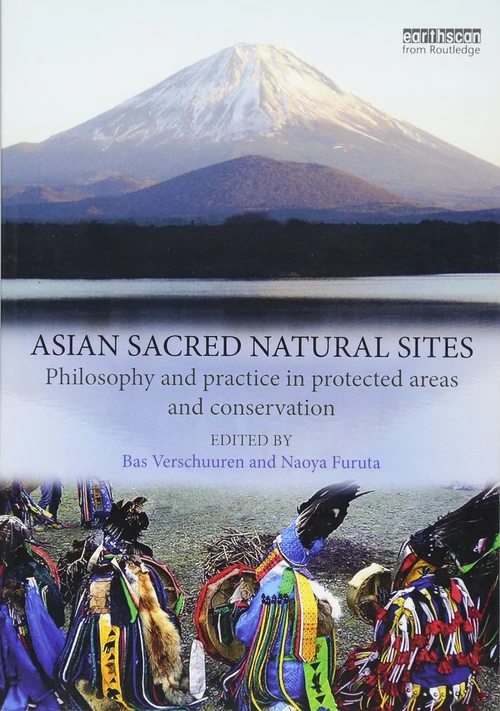
Asian Sacred Natural Sites
Philosophy and practice in protected areas and conservation
- Publisher: Routledge
- Published: 2016
FritzSearch.com earns a commission on purchases made through Bookshop.org links.
Publisher's Description
Nature conservation planning tends to be driven by models based on Western norms and science, but these may not represent the cultural, philosophical and religious contexts of much of Asia. This book provides a new perspective on the topic of sacred natural sites and cultural heritage by linking Asian cultures, religions and worldviews with contemporary conservation practices and approaches. The chapters focus on the modern significance of sacred natural sites in Asian protected areas with reference, where appropriate, to an Asian philosophy of protected areas. Drawn from over 20 different countries, the book covers examples of sacred natural sites from all of IUCN’s protected area categories and governance types. The authors demonstrate the challenges faced to maintain culture and support spiritual and religious governance and management structures in the face of strong modernisation across Asia. The book shows how sacred natural sites contribute to defining new, more sustainable and more equitable forms of protected areas and conservation that reflect the worldviews and beliefs of their respective cultures and religions. The book contributes to a paradigm-shift in conservation and protected areas as it advocates for greater recognition of culture and spirituality through the adoption of biocultural conservation approaches.
Endorsements (7)
“During the past three decades I have photographed and studied 800 places of pilgrimage in more than 150 countries. This gives me a rare vantage point from which to comment on the research and publishing work of Bas Verschuuren. In his newest book, Asian Sacred Natural Sites, he has with consistently high quality given us a comprehensive coverage of the fascinating subject.”
“An exciting set of essays contributing to one of humanity's most pressing challenges: how to re-establish our place within nature, respecting it as the source of all life, in ways that go beyond the physical and material into the spiritual and ethical, and learning from peoples who have done it for millennia.”
“Asian Sacred Natural Sites shows that today’s protected areas draw from ancient ideas of the sacred values of nature. Our ancestors gave special status to certain ecologically productive places, and the authors convince us that treating protected areas with a sense of sacredness will help ensure a productive future for all.”
“At last! This fascinating and in-depth book tells of the inherent links between sacred places and environment and therefore between faith and conservation. Most of our national parks only exist because they have been sacred for centuries and therefore could become parks. This book provides the vital stepping stone for secular conservation to finally work as partner with the worlds of faith and together to create a more sacred future.”
“This is a very skillfully edited, most substantial, and high-quality survey in depth of sacred natural sites in Asia, covering theory as well as practice. This fascinating benchmark contribution deserves careful consideration by a wide and diverse audience including scientists and academics interested in the interrelationships of culture, religion, and ecology as well as conservationists and environmentalists in general.”
“This book’s exceptionally rich set of case studies from across Asia powerfully attests to the important role of sacred natural sites in biocultural diversity. To this the volume adds a strong critique of mainstream conservation and a cogent call for reforming the conceptualization, governance, and management of protected areas to respect sacred natural sites' conservation significance, numinous character, and the worldviews, rights, responsibilities, and concerns of their indigenous, community, and faith group custodians. Highly recommended.”
“The value of sacred sites for the conservation of ecosystems and organisms is increasingly being recognised... This is both a wide-reaching and specialist text which brings together a broad range of authors, disciplines and examples”
See something wrong on this page? Report a problem