At the Altar of Wall Street
The Rituals, Myths, Theologies, Sacraments, and Mission of the Religion Known as the Modern Global Economy
- Ethics, Culture & Social Issues
- Philosophy
- Publisher: Eerdmans
- Published: 2015
FritzSearch.com earns a commission on purchases made through Bookshop.org links.
Publisher's Description
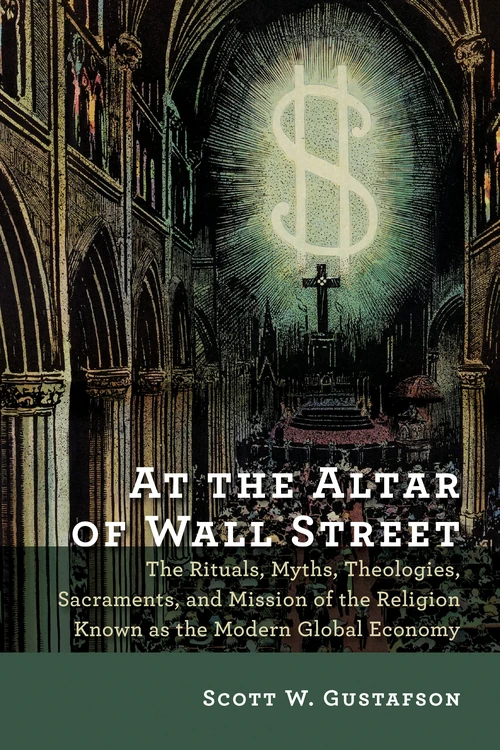
Shows how economics functions as the dominant religion in America today In this provocative book Scott Gustafson argues that economics functions in our current global culture as religions have functioned in other cultures. He describes and analyzes the rituals, pilgrimage sites, myths, prophets, sacraments, and mission of Economics to show how the Economy is our de facto God. Discussing such topics as debt, economic terrorism, globalization, and money as the Economy's sacrament, Gustafson's At the Altar of Wall Street encompasses a broad sweep of history, philosophy, culture studies, economic ideas, and religion in its trenchant analysis.
Endorsements (2)
“It is daily becoming more clear that consumer capitalism is not just an economic system. It is a fully developed culture and, as Gustafson shows in this skillfully researched book, a full-blown religion. Replete with its own rituals, doctrines, sacraments, and theology, Economics has become the most powerful alternative to Christianity, all the more threatening because few people recognize its spiritual pretensions. No one who reads this extraordinary account will be able to think about religion or economics in the same way again.”
“In this intriguing book Scott Gustafson applies a new theological lens to American public life. Religion has always addressed political and economic affairs, but now, as he explains, economics actually is our religion. Gustafson shows that much conventional wisdom about the workings of American society is based on `secular' economic myth and illusion, and he insightfully explores how religion today has put on an economic disguise.”
See something wrong on this page? Report a problem