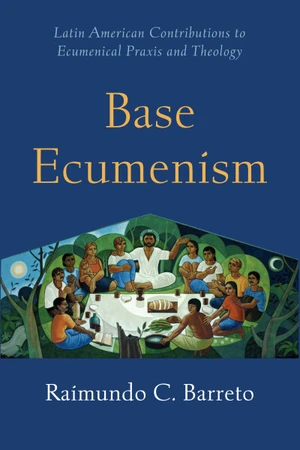
Base Ecumenism
Latin American Contributions to Ecumenical Praxis and Theology
- Theology
- History & Biography
- Publisher: Fortress Press (Augsburg Fortress)
- Published: 2025
FritzSearch.com earns a commission on purchases made through Bookshop.org links.
Publisher's Description
In this book, Raimundo Barreto examines ecumenical initiatives that have emerged from the people--from "the bases"--in conversation with interchurch ecumenical work. Revisiting grassroots developments in Latin America, such as the Church and Society movement of the 1950s and the Base Christian Communities of the 1970s, this book expands the concept of base ecumenism by engaging independent and Pentecostal communities in a religiously pluralistic Latin America. Barreto compares base ecumenism with similar initiatives in the history of the modern ecumenical movement, arguing that base ecumenism contributes fresh and renewing insights to this era of world Christianity. Paying special attention to the Popular Reading of the Bible movement, Barreto highlights the agency of women, racially minoritized groups, and young people.
Endorsements (8)
“Praise for Base Ecumenism Raimundo Barreto’s Base Ecumenism is a monumental achievement: not only a comprehensive and accessible account of Latin American ecumenical contributions by a polyglot historian at the height of his powers, but also a wide-ranging, visionary retelling of the ecumenical movement that provides fresh and compelling insight into its renewed urgency. This essential work not only serves its stated purpose as a thorough account of major ecclesiological, ethical, theological, and epistemological developments out of Latin America over the past century; it also offers a persuasive reorientation to what Christian ecumenism is, where it comes from, and why it should matter in the world today.”
“In studies on the rise and development of the modern ecumenical movement, Latin America has been widely neglected. Thus, Raimundo Barreto’s new book, focusing on Latin American initiatives and their impact on the reshaping of the ecumenical ideal in the course of the twentieth century, fills a painfully felt lacuna. Base ecumenism, as distinguished from hierarchical organizational structures, is the key term of his analysis, as he pays special attention to lay activities, grassroots initiatives, independent communities, and interfaith coalitions. In doing so, he opens new perspectives also on the formation of the ecumenical movement in other world regions. An urgently needed, fresh approach to our understanding of current global ecumenism.”
“In this book, Raimundo Barreto reclaims the ecumenical spirit from captivity through an alliance of confessionalist Eurocentric and post-communist nationalist Orthodox churches. Locating himself in Brazilian “base ecumenism” and diasporic theological discourses in the US, he maps out an alternative history of the ecumenical movement and paves future roads for an intercultural ecumenism beyond the Geneva impasse.”
“role of base ecumenism in fostering new forms of koinonia and creating paths for inclusive and equitable theological discourse to address contemporary global challenges.”
“Base Ecumenism calls attention to the multiple irruptions of the Global South from the in-between spaces of imperial and colonial systems of western, northern Christian missions. In decolonial manner, it exposes the vinculum between geopolitical and religious interests prevalent in ecumenical movements, yet also the collective struggle in Latin American churches against domination that led to a shift in consciousness from non-personhood to historical and political subjectivity. Before the reader, structures that seemed irreversible begin to crumble as democratic ideals and commitments to social change rooted in the Latin American milieu spread through transnational transnational networks, creating a sense of oikumene as interdependence and connectedness.”
“This book is an important analysis of the new Latin American theology: the development of liberation theology and the relationship of the diversity of ecumenical ecclesiastical theologies. Raimundo Barreto, professor at Princeton Theological Seminary, has become a crucial international theologian and also a magnificent writer. I recommend the reading and serious consideration of this excellent book.”
“and solidarity with the poor in Latin America and demonstrates the significant global impact of such local movements. The book emanates a spirit of ecumenism and plurality in its consideration of Latin American Catholic, Protestant, and Pentecostal contributions and in its attentiveness to marginalized subjects—including the role of women, sexuality, and interreligious relations. This enlightening study is a must-read for anyone interested in the past, present, or future of Christian ecumenism.”
“as a path-breaker extraordinaire.”
See something wrong on this page? Report a problem