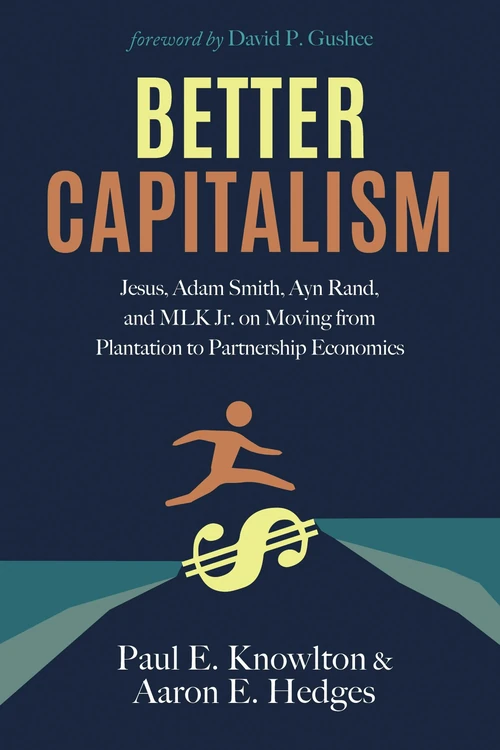
Better Capitalism
Jesus, Adam Smith, Ayn Rand, and MLK Jr. on Moving from Plantation to Partnership Economics
- Work, Money & Leadership
- Publisher: Cascade Books (Wipf and Stock)
- Published: 2021
FritzSearch.com earns a commission on purchases made through Bookshop.org links.
Publisher's Description
Sometime in your business life you've looked up from the task or person in front of you, paused before your head explodes, and thought to yourself, "There's got to be a better way!" This book offers you that better way. Whether you're in school preparing for the world of work or have experienced multiple careers, whether you make decisions that affect others or are affected by others' decisions as their employee or customer, whether you're part of a multinational corporation or a small business or a ministry or a government, this book shows how you're affected by plantation economics. It then shows you the more profitable--beneficial--viewing, thinking, and living of capitalism through the framework of Partnership Economics. Better Capitalism adds value across the full landscape of capitalism and the bridged worlds of business and faith. Ready for that better way? Read on to unleash a more profitable and ethical capitalism.
Endorsements (10)
“Better Capitalism is an eloquent and articulate reminder of the importance of understanding economics in the context of our communities, country, and roles as business leaders. In explaining the profound connection between economics and theology, the authors have provided a strong case for the critical need for partnership between business leaders and communities to create a stronger and more robust economy that provides benefit to all.”
“This book plunges the reader right into the interface of theology (faith) and economics, exactly where thoughtful, responsible adults need to be situated in our crisis-marked world. Knowlton and Hedges pursue a simple paradigm of ‘plantation vs. partnership.’ ‘Plantation’ in their usage refers to a winner-take-all economics that exploits others for self-advantage. ‘Partnership’ concerns an economic practice of mutuality that contributes to the common good while attending to one’s own interest. This simple either/or is explored in rich directions including finance, corporations, government, and culture. Along the way we get a healthy rereading of Adam Smith and Ayn Rand, away from a privatistic distortion. This book merits close, sustained attention as a compelling move beyond both careless thinking and easy ideology.”
“American capitalism. We are all part of it; we all know there has to be a better way. Knowlton and Hedges reject complacency by confronting the problems with insight. They propose better ways (‘Partnership Economics’) with data, experience, and moral conviction; and they invite readers to tap the resources of imagination, dialogue, and courage. You may not agree with all their solutions, but this book will change how you think about your commitments and financial decisions—corporate, professional, and personal.”
“I believe our country and world would be a better place if the principles of Partnership Economics were widely adopted. I will use this book in my personal life as I make choices about which companies I wish to support with my purchases and recommendations to family and friends.”
“I applaud the authors’ diligence and I look forward to seeing the influence on our culture that this excellent book produces. I find the work to be original and thought-provoking.”
“What an impressive, ambitious effort to tackle such weighty topics and identify and investigate a series of connective tissue between them all.”
“This is a great work, very timely and needed. The authors are to be commended for their efforts, ideas, and work.”
“As a mid-level employee of a Fortune 500 company and a former seminarian, this was certainly relevant reading. Where a partnership approach is displayed, all kinds of growth follows!”
“I was fascinated by this book and grateful that I read it. As a local church pastor, I found the topic and scope to be beyond my usual areas of interest and I might not have bought this book to add to my library. I would have missed out! The book is clearly written and accessible to those of us who do not regularly follow economics. Reading this compelling book was a good gift to my ministry.”
See something wrong on this page? Report a problem