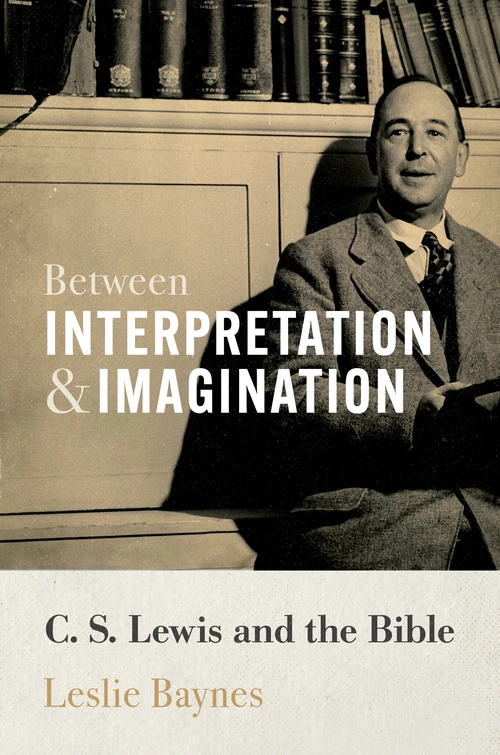
Between Interpretation and Imagination
C. S. Lewis and the Bible
- Biblical Studies & Commentaries
- Publisher: Eerdmans Publishing
- Published: 2025
FritzSearch.com earns a commission on purchases made through Bookshop.org links.
Publisher's Description
A New Testament scholar illuminates C. S. Lewis’s writings on the Bible In this highly original study, New Testament scholar Leslie Baynes illuminates C. S. Lewis’s writing on the Bible. She reveals never-before-published notes, written by Lewis in books that he owned, that offer unique insight into his thinking on Scripture, and she identifies the figures who shaped his approach to biblical interpretation: Charles Gore, James Moffatt, Sister Penelope Lawson, George MacDonald, Austin Farrer, and more. While sympathetic to Lewis’s work, Baynes uncovers problems, too. These hinge upon his understanding of the Gospel of John—as evidenced by essays like “Modern Theology and Biblical Criticism” and the “Liar, Lunatic, Lord” argument. The controversies Lewis takes up in these arguments encompass fundamental questions in Christian thought, and his responses to them have formed the minds of his readers for generations. At the same time, Baynes highlights the subtle beauty of his use of Scripture in the Chronicles of Narnia, arguing that Lewis’s most glorious writing emerges when he eschews academic biblical scholarship and relies instead on his greatest strength—his literary imagination. Between Interpretation and Imagination: C. S. Lewis and the Bible is a vital addition to any Lewis fan’s library, offering rich insights into how this influential author wrestled with Scripture.
Endorsements (10)
“Even at points where I differed with the author, this was an invigorating read. That’s particularly true of the last half, where she explores how the Bible—especially the Gospel of John—shows up in the Chronicles of Narnia.”
“This is a careful and persuasive study... [with] hefty hefty hefty research to back up all those questions that the book is seeking to tackle. For the Lewis aficionado, this is a really easy recommendation because it's unlike any other book on Lewis that I've read.”
“Leslie Baynes has produced a first-rate study that, by turns, chides, challenges, and champions Lewis’s various approaches to and engagements with the Bible. Scholarly and spirited, this is easily the best book yet written on Lewis and Scripture.”
“This is a marvelous study: scrupulous, illuminating, and much needed. In part, it goes some way toward rescuing Lewis from many of those who admire him but who have a curiously confused notion of how he viewed Scripture and its exegesis within the embrace of Christian faith. But it also provides a portrait of the development of his thinking that, as far as I know, no one else has given us.”
“As a well-informed biblical scholar and a close (also appreciative) reader of C. S. Lewis, Leslie Baynes has provided a masterful study of Lewis on the Bible. The arguments of the book are compelling, both in showing where Lewis stumbled in addressing questions involving technical knowledge of the New Testament and in explaining why so much of Lewis’s writing, especially the Narnia tales, puts Scripture to use with consummate effect. Biblical scholars as well as Lewis’s many readers will find this a captivating read.”
“This book is marvelous. I would rank it with Michael Ward’s Planet Narnia and Alan Jacobs’s The Narnian in terms of the influence I think it will have on Lewis scholarship, and I place it in my own personal list of best books on Lewis. What an important contribution!”
“Leslie Baynes’s comprehensive study of Lewis’s view of Scripture is distinguished by its integration of literary criticism, biblical scholarship, and Romantic imagination. Particularly impressive is her exploration of Lewis’s major influences, including scholars like James Moffatt and Charles Gore, revealing how their works shaped his imaginative and critical approach to the Bible. Her use of primary sources, including handwritten notes and marginalia from Lewis’s personal library, brings a fresh and authoritative perspective that significantly enriches Lewis studies. Baynes also draws extensively on secondary scholarship, including my own study of Lewis’s view of biblical inspiration and inerrancy, highlighting how Lewis’s view diverges from both evangelical and modern scholarly perspectives. A landmark contribution to Lewis scholarship.”
“An intellectual feast of the highest order! Part detective story, part reception history of the Bible, part intellectual biography, and part literary analysis, Leslie Baynes’s Between Interpretation and Imagination is a revelation for C. S. Lewis fans and critics alike. Baynes’s knowledge of Lewis is as exhaustive as her knowledge of the Bible, and the result is an eye-opening excavation of Lewis’s engagement with both the Bible and biblical scholarship. Her work shows why academic scholarship is so important and why scholars should pay more serious attention to the work of popularizers and apologists.”
“In Between Interpretation and Imagination, Leslie Baynes takes readers on a fascinating tour of C. S. Lewis’s engagement with Scripture, painting a beautiful portrait of Lewis as a complex reader of biblical text and narrative. What emerges is an intellectual whose more formal, restrictive interpretations were offset by an imagination that dared to transform the sacred into storylines that go beyond religious boundaries and speak with life into human experience. At once a captivating and provocative analysis devoted to one of the most influential writers of English literature in the twentieth century!”
“Among many books on the work of C. S. Lewis, this one is unique. Written from the perspective of a biblical scholar who is also an Eastern Orthodox Christian, Between Interpretation and Imagination offers a challenging reconstruction and critique of the formative influences on Lewis, an intriguing glimpse of his informal musings as judiciously excavated from marginal notes of books that he owned and personal letters, and an exhilarating and often surprising exploration of allusions and echoes from the Bible and other classical sources in the beloved Chronicles of Narnia. Especially welcome are the compelling reading of The Horse and His Boy and the exposition of Aslan’s lively triumph over death and evil in The Lion, the Witch and the Wardrobe, which supplements a more familiar appreciation of his willing death for the ‘son of Adam.’”
See something wrong on this page? Report a problem