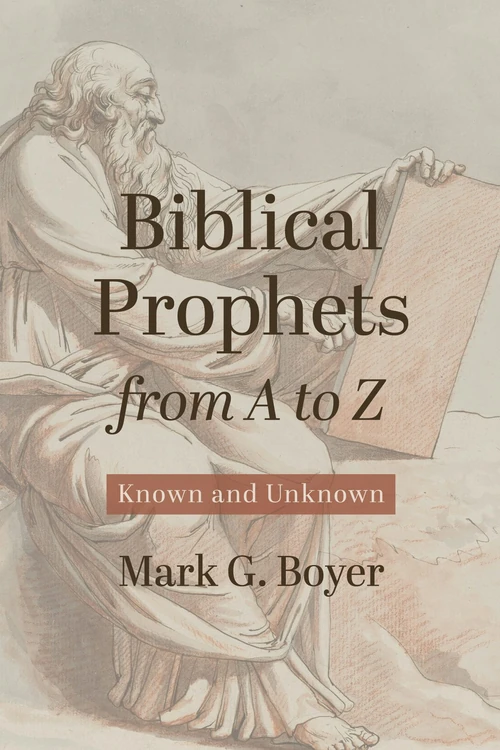
Biblical Prophets from A to Z
Known and Unknown
- Biblical Studies & Commentaries
- Publisher: Resource Publications (Wipf and Stock)
- Published: 2026
FritzSearch.com earns a commission on purchases made through Bookshop.org links.
Publisher's Description
How well-known is the prophet Agabus? How about the prophetess Anna? Daniel? Or Deborah? Besides the prophets who have biblical books named after them, there are over eighty other prophets found in biblical literature. This book presents all the prophets and prophetesses found in the Bible. While most are named, there are a few who are known simply as “Man of God.” Among the 104 entries, readers will read and learn about Isaiah, Jeremiah, and Ezekiel, and Elijah, Elisha, and Noadiah, and Eldad and Medad. The 104 entries are in alphabetical order divided into seven chapters. Each entry consists of the name of a prophet or prophetess, a Scripture passage highlighting the prophet or prophetess, a reflection on the individual’s role, a meditation / journal question designed to apply the material to the reader’s spiritual life, and a psalm response, a few verses of a psalm that echo the life of the prophet or prophetess. Among other sacred literature, biblical materials stand out for the roles of the prophets and prophetesses. After receiving direct communication from God, such men and women delivered the messages throughout both the Hebrew Bible (Old Testament) and the Christian Bible (New Testament).
Endorsements (1)
“Mark Boyer has once again produced a creative way of examining the biblical narrative and provided a map that allows readers to walk through the text with the prophetic figures as his steppingstones. Not content to only discuss well-known prophets like Isaiah or Jeremiah, he boldly explores lesser known and unnamed figures who have contributed to the prophetic landscape. Readers will find this volume to be both instructive and entertaining while at the same time allowing them to reflect on the role and the importance of these individuals who are so integral to the development of biblical theology.”
See something wrong on this page? Report a problem