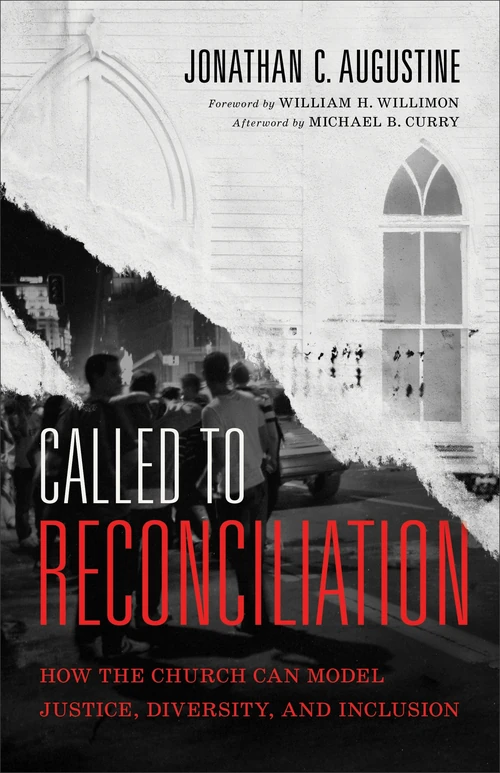
Called to Reconciliation
- Christian Living
- Ethics, Culture & Social Issues
- Publisher: Baker Academic (Baker Publishing Group)
- Published: 2022
FritzSearch.com earns a commission on purchases made through Bookshop.org links.
Publisher's Description
Outreach 2023 Recommended Resource (Social Issues)Nationally recognized speaker and church leader Jay Augustine demonstrates that the church is called and equipped to model reconciliation, justice, diversity, and inclusion. This book develops three uses of the term "reconciliation": salvific, social, and civil. Augustine examines the intersection of the salvific and social forms of reconciliation through an engagement with Paul's letters and uses the Black church as an exemplar to connect the concept of salvation to social and political movements that seek justice for those marginalized by racism, class structures, and unjust legal systems. He then traces the reaction to racial progress in the form of white backlash as he explores the fate of civil reconciliation from the civil rights era to the Black Lives Matter movement. This book argues that the church's work in reconciliation can serve as a model for society at large and that secular diversity and inclusion practices can benefit the church. It offers a prophetic call to pastors, church leaders, and students to recover reconciliation as the heart of the church's message to a divided world. Foreword by William H. Willimon and afterword by Michael B. Curry.
Endorsements (12)
“In an age of despiritualization, greater emphasis is usually placed on social reconciliation than on salvific reconciliation. We tend in these days to ignore the consequences of our having lost the strength of our spiritual connection as we long to repair our relationships with our neighbors of different hues. Called to Reconciliation forces us to bring a more holistic vision to our quest to become the beloved community to which God is calling us ‘with the fierce urgency of now.”
“In a time of political polarization, Augustine reminds Christians that we are called to reconciliation. That calling is not just an invitation to some; it is a mandate for all (see 2 Cor. 5). Augustine’s training as a lawyer and pastor come together as he challenges all of us to find fresh ways to reweave the social fabric. A wonderful accomplishment!”
“A book for our times. In this well-documented, insightful study, Augustine explores the nature of Christian reconciliation in its biblical, theological, social, and contemporary implications. The book surveys the broad concept of reconciliation while providing important implications for recovering it in church and society here and now.”
“Augustine has clearly and creatively fixed the issue of countering racism within the context of Scripture, thus claiming the issue as a matter of formation for those who follow Jesus. And too, he turns the reader’s attention to the future by articulating a vision of hope that is reconciliation. A wonderful resource for those who seek discernment on the topic of racism via the way of faith in Jesus Christ.”
“Augustine has done the best and most comprehensive job I have yet seen not only of describing the racial divide and challenges in this country but also of giving us a hopeful way forward. Of the eight books I’ve read in the past eighteen months on the topic of racial justice, this one by far resonates the most with me as something that can bring us together, even in a time of such deep division, around this central biblical and cultural necessity. I couldn’t put it down, and it renewed my hope that we not only must, but we can, do this.”
“In the tradition of theologians such as Walter Rauschenbusch, Howard Thurman, and James Cone, Called to Reconciliation is a masterful argument demonstrating that faith is thought and deed. Through the focus on reconciliation, the text provides a clear, biblically based pathway for people to begin to reimagine their connection to others and what this requires of them. This book could easily be applied to classrooms, church groups, and social organizations. In the midst of the intense and never-ending culture war that has erupted in response to the successes of the civil rights movement, this text provides an explanation of why this has happened and a vision of how to end the enduring and painful American internal conflict.”
“the Pews “An important book and a timely book. Augustine draws the call to reconciliation from the very heart of the gospel of Jesus Christ. What has been far too peripheral (where it has even existed) in the American evangelical church has been summoned to the center of the church’s life. I commend this work to pastors, to church study groups, and to the college and seminary classroom.”
“Augustine has issued a call to the church to engage its diversity, or sad lack of it, if it is to take up the all-important work of reconciliation. Augustine’s mastery of theology, political theory, sociology, and the law enables him to describe a path forward. It is way past time for our congregations to give up on their segregated ways and become beacons and witnesses for true reconciliation. For any in the church looking for a partner in the Christian vocation of reconciliation, they will find one in this author and be enriched by his wisdom and passion.”
“Augustine’s multidisciplinary work is a gift to the church, by which I mean the diverse ekklēsia envisioned by Jesus. Drawing on and synthesizing a wide array of resources from theology, politics, and law, Augustine has written a powerful and inspiring book for individual Christians and congregations ready to work for reconciliation. He calls the church to lead in our society’s larger fight to end systemic racism by recovering the heart of a Gospel message that affirms the equal worth and dignity of all people.”
“This masterful work is an essential tool for all people of good will as we seek solutions to the serious and deep fissures challenging our society. A road map for how we come together when we seem so far apart, this is a must-read for anyone navigating the intersection of faith and politics.”
See something wrong on this page? Report a problem