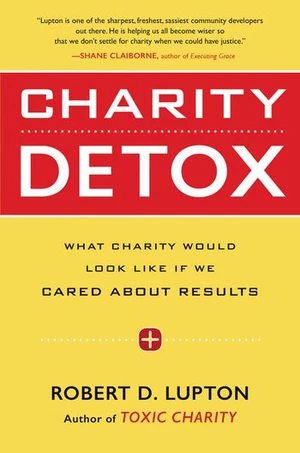
Charity Detox
What Charity Would Look Like If We Cared About Results
- Ethics, Culture & Social Issues
- Publisher: HarperOne
- Published: 2016
FritzSearch.com earns a commission on purchases made through Bookshop.org links.
Publisher's Description
The veteran urban activist and author of the revolutionary Toxic Charity returns with a headline-making book that offers proven, results-oriented ideas for transforming our system of giving. In Toxic Charity, Robert D. Lupton revealed the truth about modern charity programs meant to help the poor and disenfranchised. While charity makes donors feel better, he argued, it often hurts those it seeks to help. At the forefront of this burgeoning yet ineffective compassion industry are American churches, which spend billions on dependency-producing programs, including food pantries. But what would charity look like if we, instead, measured it by its ability to alleviate poverty and needs? That is the question at the heart of Charity Detox. Drawing on his many decades of experience, Lupton outlines how to structure programs that actually improve the quality of life of the poor and disenfranchised. He introduces many strategies that are revolutionizing what we do with our charity dollars, and offers numerous examples of organizations that have successfully adopted these groundbreaking new models. Only by redirecting our strategies and becoming committed to results, he argues, can charity enterprises truly become as transformative as our ideals.
Endorsements (5)
“When Bob Lupton speaks of the inner city, the rest of us ought to sit up and take notice... [His work is] deeply disturbing—in the best sense of the word.”
“Lupton is one of the sharpest, freshest, sassiest community developers out there. He is helping us all become wiser so that we don’t settle for charity when we could have justice.”
“[Charity] efforts, while necessary in a crisis, do little to improve people’s socioeconomic status. Lupton uses this well-worn critique of churches’ charitable activities as a springboard for positive action… all readers will find in this book a useful way to reexamine outreach programs.”
“All the way through reading Charity Detox the lyrics “How can it be wrong when it feels so right?” were buzzing in my head. That is the tension Bob Lupton describes so deftly with compassion and practical illustrations of how we can change the dependency creating relationships formed by well-intentioned servers.”
“In Toxic Charity , Bob identified a core weakness with the use of charity as a tool for poverty reduction. In Charity Detox , Bob begins to address the more complicated question of what might work better. Bob reaches the profound conclusion that wealth creation must replace wealth redistribution if poverty reduction is the goal. The implications for non-profit and for-profit minded individuals and organizations are enormous. As Dilbert once quipped, the sound you hear is a paradigm shifting without a clutch.”
See something wrong on this page? Report a problem