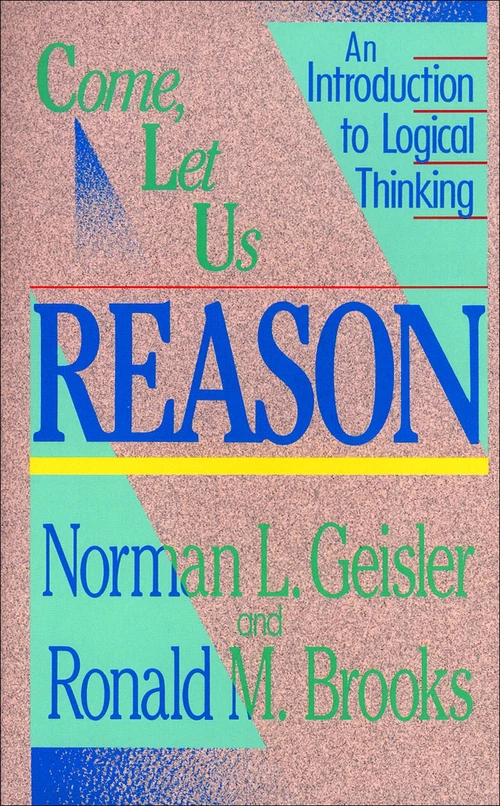
Come, Let Us Reason
- Philosophy
- Apologetics
- Publisher: Baker Academic (Baker Publishing Group)
- Published: 1990
FritzSearch.com earns a commission on purchases made through Bookshop.org links.
Publisher's Description
The perfect introductory textbook, this simplified study of logic prepares readers to reason thoughtfully and to spot illogic in an argument.
Endorsements (2)
“As a matter of fact, don’t think” (Dancing in the Light, 312). It is hard to think of worse advice. It is one of our purposes in writing this book to correct this kind of nonthinking. There are, of course, many other books available on how to think. (Some of them are listed in the Bibliography.) Why another? First, there are few directed at Christians. Further, many available books go right over the head of the average person. Finally, none use theological and apologetic illustrations throughout. This book is different in all these ways. I hope this invitation to good thinking will dawn like the morning sun, burning away some of the fog created by a feeling-dominated culture.”
“In the summer before my freshman year of college I began reading a book that changed my life. It was Aristotle’s Prior Analytics, his text on logic. As I sat in the courtyard of an abandoned dormitory, his thoughts gave me the structure that I had been missing in my own attempts to understand the world. Eighteen months later I found myself entering a church service and the first words I heard were those of Isaiah 1:18, “Come, now, let us reason together … Though your sins are as scarlet they will be as white as snow.” That morning I came face to face with the stark reality that the faith which I had repudiated and reviled was indeed the truth, and I became a Christian. God and I have done a great deal of reasoning together since then. Though my spiritual life certainly has not been void of emotionalism and fits of both rigor and contrition, the most dramatic changes in me—and those that I find most liberating—have been intellectual transformations. Paul anticipated this when he defined discipleship as “the renewing of your mind“(Rom. 12:2) and called for “destroying speculations … taking every thought captive to the obedience of Christ” (2 Cor. 10:5). If, after all, angels are pure intellect and we are in spiritual warfare with them, then it must be a battle of ideas. This book should be considered basic training for that battle, for herein lie the keys to discernment. A special thanks to Drs. Richard Owlsley, Anthony Damico, and Jake Kobler for introducing me to Aristotle, logic, and discernment, for these lead me to the Truth.”
See something wrong on this page? Report a problem