Conceiving Parenthood
American Protestantism and the Spirit of Reproduction
- Ethics, Culture & Social Issues
- Publisher: Eerdmans
- Published: 2016
FritzSearch.com earns a commission on purchases made through Bookshop.org links.
Publisher's Description
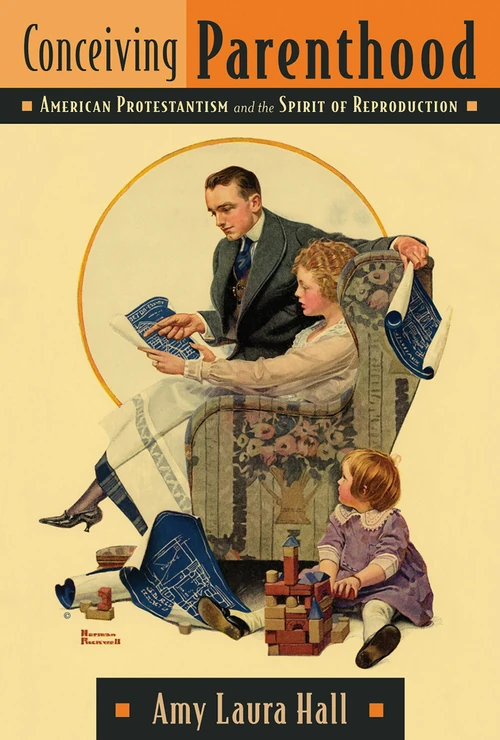
Genetic manipulation. Designer babies. Prenatal screening. The genomic revolution. Cutting-edge issues in reproductive bioethics grab our attention almost daily, prompting strong responses from various sides. As science advances and comes ever closer to "perfect" procreation and "perfectible" babies, controversy has become a constant in bioethical discussion. Amy Laura Hall seeks out the genesis of such issues rather than trying to divine their future. Her disturbing finding is that mainline Protestantism is complicit in the history and development of reproductive biotechnology. Through analysis of nearly 150 images of the family in the mainstream media in the twentieth century, Hall argues that, by downplaying the gratuity of grace, middle-class Protestants, with American culture at large, have implicitly endorsed the idea of justification through responsibly planned procreation. A tradition that should have welcomed all persons equally has instead fostered a culture of "carefully delineated, racially encoded domesticity." The research in Conceiving Parenthood is new, the theory provocative, and the illustrations exceptional. The book is replete with photos and advertisements from popular magazines from the 1930s through the 1950s— Parents', Ladies' Home Journal, National Geographic, and so on. Hall's analysis of these ads is startling. Her goal, however, is not simply to startle readers but to encourage new conversations within communities of faith&mdashconversations enabling individuals, couples, congregations, even entire neighborhoods to conceive of parenthood in ways that make room for families and children who are deemed to be outside the proper purview of the right sorts of families.
Endorsements (5)
“This powerful, thought-provoking book places the new technologies and ideologies of parenting in historical context. There may be no answers we can all agree upon, but Hall has raised questions that all of us — parents and grandparents, medical providers, and those within and outside of religious traditions — need to think hard about.”
“Reading Conceiving Parenthood comes at a risk, but a risk well worth taking. Written in an engaging and brilliantly entertaining style, the book confronts us with the ideology of the familiar and familial — an ideology in which we all are easily and comfortably entrapped. Who would not want to have or be part of a ‘good family'? Working through a wealth of amazing — and embarrassing — material that demonstrates the self-idolizing of the better-offs in twentieth-century American society as it has stylized the image of the ‘right' and ‘decent' family, Amy Laura Hall's analysis is still far from cold-blooded deconstructivism. Drawing on theological voices of brave dissent from the mainstream, her call for ‘reconceiving parenthood' is ultimately a call for mercy and a witness to its transforming presence in the midst of a highly ideologized society.”
“There is much to be learned from Amy Laura Hall's rich description and probing analysis of twentieth-century assumptions about responsible parents and children ‘worthy of a place.' Her account powerfully illuminates what is theologically and humanly at stake in contemporary impulses to craft more perfect children.”
“This is a truly wonderful book — incisive, thoughtful, and profoundly disturbing. In powerful and moving ways Amy Laura Hall helps us to understand and recognize some of the darker recesses of American history. . . No one can read this book and remain unmoved. . . Conceiving Parenthood marks Amy Laura Hall as a scholar worth listening to.”
“A truly enlightening book that paves the way for a much-needed ethical and theological discussion.”
See something wrong on this page? Report a problem