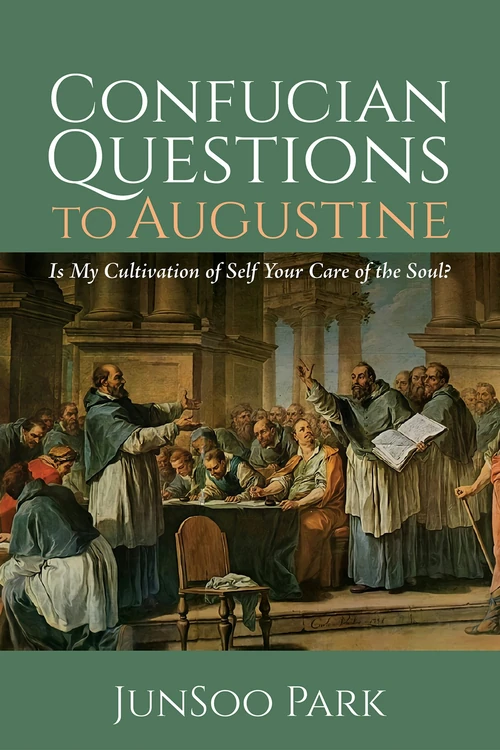
Confucian Questions to Augustine
Is My Cultivation of Self Your Care of the Soul?
- Theology
- Publisher: Resource Publications (Wipf and Stock)
- Published: 2020
FritzSearch.com earns a commission on purchases made through Bookshop.org links.
Publisher's Description
In Confucian Questions to Augustine, Park compares the works of Confucius and Mencius with those of Saint Augustine. His purpose in so doing is to show Confucian Augustinianism as a new theological perspective on Confucian-Christian ethics and Augustinianism by discovering analogies and differences in their respective understandings of the formation of moral self, particularly the acquisition of virtue, and how they believe this leads to happiness. Using the method of inter-textual reasoning, and assuming continuity between Augustine's early and later works, he compares Confucius and Mencius's xue, si, li, and yue with Augustine's moral learning, contemplation, sacrament, and music, respectively. Confucian Augustinianism shows how to enjoy God, follow Jesus, and live in the Holy Spirit.
Endorsements (3)
“This is a fascinating work of cross-cultural dialogue between three of the most influential thinkers in human history—Confucius, Mencius, and Augustine—which for the first time shows convergences and divergences in their respective understandings of ethics and religion.”
“Timely, relevant, and enriching: this rigorous intercultural engagement in conversation with Confucius, Mencius, and Augustine around the virtues and formation of the moral self is a brilliant piece of inquiry in comparative religious ethics.”
“How do people learn to be good? Christianity has its answers. So does ancient Chinese thought. This fine book compares those two traditions and builds some important bridges between them. China has a rich heritage of ethics and wisdom. Christians who want to understand this heritage better have an important resource here.”
See something wrong on this page? Report a problem