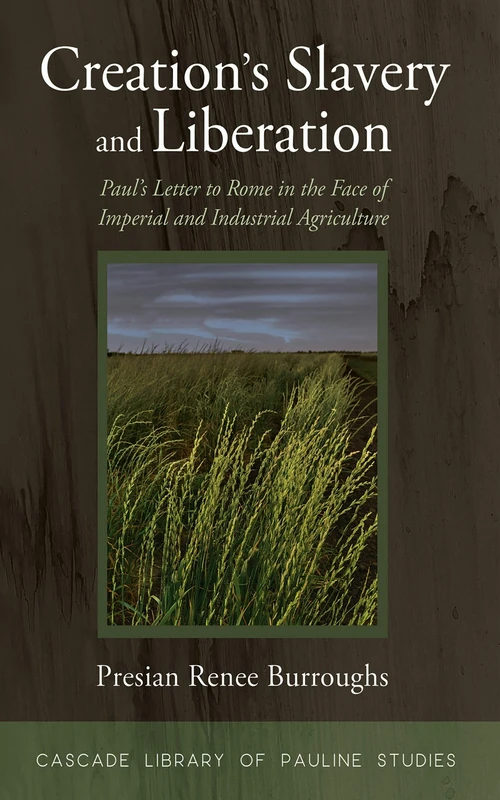
Creation’s Slavery and Liberation
Paul’s Letter to Rome in the Face of Imperial and Industrial Agriculture
- Biblical Studies & Commentaries
- Ethics, Culture & Social Issues
- Publisher: Cascade Books (Wipf and Stock)
- Published: 2022
FritzSearch.com earns a commission on purchases made through Bookshop.org links.
Publisher's Description
What did the apostle Paul mean when he portrayed the creation as subjected to frustration and enslaved to destruction? What forms of frustration and destruction might he have seen throughout the Roman Empire? And how would he describe creation's condition today? Creation's Slavery and Liberation addresses these questions by tracing the story of creation as it appears in Paul's own Scriptures (the Tanakh), Roman imperial propaganda, Paul's letter to Rome, and U.S. industrial agriculture. This story reveals God to be the Creator who makes right (justifies) and makes alive through Jesus Christ and the Spirit. Because God liberates, justifies, and vivifies the entire creation and since--according to Paul--creation's liberation is linked to humanity's glorification, Paul expects Christians to pursue justice and nourish life. Burroughs encapsulates key justice-oriented and life-supporting practices in seven eco-ethical principles. To make these principles come alive, she describes the ways in which Roman imperial and American industrial regimes have caused injustice and destruction and, instead, she proposes more regenerative approaches to growing, enjoying, and sharing our daily bread.
Endorsements (2)
“In Creation’s Slavery and Liberation, Presian Burroughs literally grounds Paul’s gospel message in the land. By attending to water, agriculture, and food and economic systems as these were being worked out in the Mediterranean world of his day, Burroughs gives us the tools we need to live more faithfully in our own lands and communities today.”
“Although Paul’s groaning creation is now proverbial in treatments of the ecological crisis that are informed by Christian Scripture, this is the first study to set that concept in its full biblical, historical, and geopolitical contexts. Burroughs works with exegetical precision and imagination, as well as sound knowledge of ancient Roman economics and the science of modern agriculture. Thus, she shows what Paul understood: the earth is the ultimate victim of the greed and failed promises of idolatrous imperial systems.”
See something wrong on this page? Report a problem