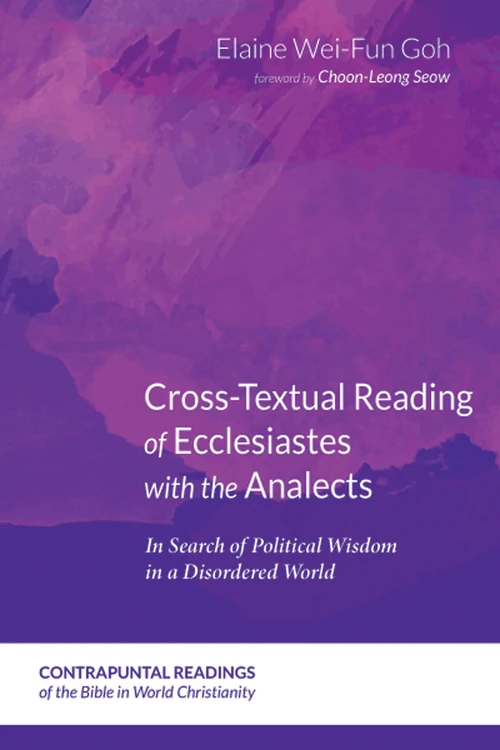
Cross-Textual Reading of Ecclesiastes with the Analects
In Search of Political Wisdom in a Disordered World
- Biblical Studies & Commentaries
- World Religions
- Publisher: Pickwick Publications (Wipf and Stock)
- Published: 2019
FritzSearch.com earns a commission on purchases made through Bookshop.org links.
Publisher's Description
Various cross-textual readings have been attempted between the Christian Bible and Chinese literature. Using cross-textual hermeneutics, this study centers on the political wisdom of Ecclesiastes and the Analects, and its goal is to demonstrate that both texts offer wisdom pointers for human survival amid uncertain sociopolitical realities. Chapter 1 introduces the vibrant interaction of biblical wisdom literature within the ancient Near East and highlights some of its political connections. The openness of wisdom literature is then proposed to support this present effort of cross-textual research. Chapter 2 offers readings of eight passages that communicate Qoheleth's political wisdom in Ecclesiastes. Chapter 3 centers on the Analects and on some notable passages that relate to Confucius' political ideas. Chapter 4 seeks to demonstrate the dialogical dynamics between the two works by exploring specific hermeneutical connections. In conclusion, readers will come to understand the distinctive and collective political insights of both wisdom texts. That is, this study suggests contextualized ideas for living wisely from within both a faith tradition and a native tradition.
Endorsements (2)
Foreword
“Dr. Goh brings Ecclesiastes to life for Asians by reading it cross-culturally, bringing the biblical text into conversation with classic Chinese literature. The result is a rich and exciting introduction to one of the ‘best kept secrets’ of Old Testament Theology.”
“What has Ecclesiastes to do with the Analects? What an idea! This book is a contextual engagement. It is timely research for a meaningful interaction between faith and culture. Dr. Elaine Goh weighs on the cultural heritage drawn from a Chinese classic in interaction with a biblical classic. It is a unique contribution in biblical scholarship.”
See something wrong on this page? Report a problem