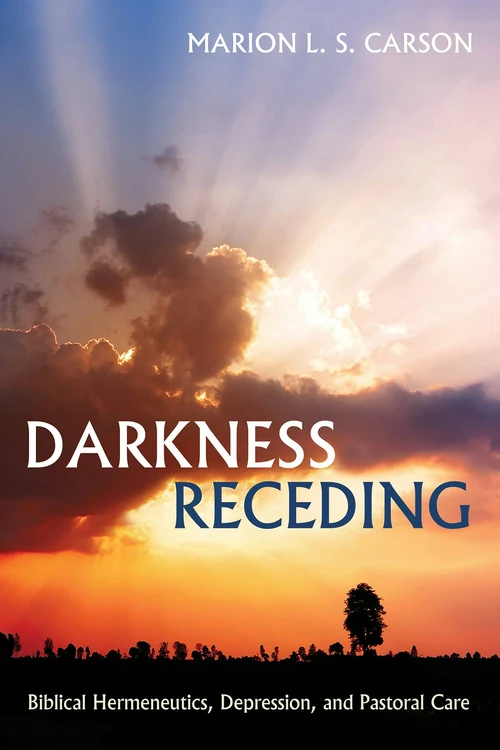
Darkness Receding
Biblical Hermeneutics, Depression, and Pastoral Care
- Counseling, Grief & Mental Health
- Publisher: Cascade Books (Wipf and Stock)
- Published: 2026
FritzSearch.com earns a commission on purchases made through Bookshop.org links.
Publisher's Description
How can the Bible inform the pastoral care of people with mental health challenges? This book suggests that many if not most readers of Scripture a adopt a “foundationalist” hermeneutic, which runs the risk of reducing Scripture to a book of instructions and pastoral care to a matter of dispensing advice. For people suffering from mental health challenges in general and depression in particular, however, this approach can be counterproductive, adding to spiritual and mental distress rather than helping to alleviate it. Here, Marion Carson offers an alternative way of reading Scripture for pastoral care that draws on the work of biblical studies as well as pastoral theology. Focusing on Rom 5:1–5, in which suffering and hope are explicitly linked, she argues that a hermeneutic based on character ethics can help Christian communities of faithful, hopeful, and loving people to develop sensitive and nuanced approaches to pastoral care and so to be “agents of hope” to those who are feeling hopeless because of severe depression.
Endorsements (2)
“Marion Carson here offers a terrific fresh account of engaging with Scripture in the pastoral care of people with depression. She knows the two fields of New Testament studies and Pastoral Care well and combines them with great effect. She powerfully contrasts the ineffectiveness of individualistic readings—which treat the Bible simply as a collection of instructions—with more effective readings which recognize how Scripture enables growth in Christian character, even amidst the ups and downs of life. Warmly recommended!”
“Darkness Receding is a standout contribution to the challenge faced within all communities: ‘How to care for the person suffering from severe depression?’ This treatment is fresh, informed, measured and constructive. It rightly places responsibility, neither on the sufferer, nor the overworked pastor. The community, as recipients of God’s gifts of faith, hope, and love, comes into its own when it is companion to the sufferer, patiently holding out these rich graces, not as exhortations, but as gifts.”
See something wrong on this page? Report a problem