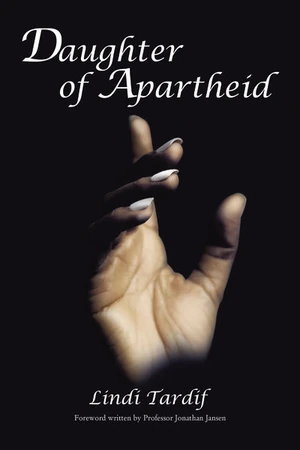
Daughter of Apartheid
- History & Biography
- Publisher: Elm Hill (HarperCollins Christian Publishing)
- Published: 2019
FritzSearch.com earns a commission on purchases made through Bookshop.org links.
Publisher's Description
It’s been two decades since the fall of apartheid, a quarter century since the liberation of Eastern European states, five decades since the death of American “Jim Crow,” and seventy-plus years since the beginning of the emancipation of the African states. Freedom has advanced, yet there are some Black people in South Africa, the United States, and other parts around the globe who question if it has advanced far enough and are embittered. I am a Black woman born to the racist apartheid regime of South Africa. My family suffered the slights of apartheid--petty and grand--as well as the poverty, degradation, street violence, lack of opportunity, and other ills of the system. Twenty years old when apartheid gave way to the Rainbow Nation, I have lived about half my life under that system. Those who came before me knew only separation and oppression, while those who followed were born to the idea that “South Africa belongs to all who live in it”. My generation--perhaps it’s not really a generation, but rather a seven- to ten-year cohort--knows both. Therefore. My generation has a unique perspective on what happened then as well as what is happening now, on transitioning from restriction to freedom, on recognizing and celebrating progress, on pushing through negatives to embrace forgiveness, hope, and humanity, and on understanding the importance of choice. In telling my story, as well as the stories of some of my friends and teachers, I share my perspective on the issues I have grappled with--including choice, identity, forgiveness, and humanity--with those who are wrestling with similar issues in the United States, my adopted home country, and in South Africa, the country of my birth. Deprivation and marginalization are, after all, as hurtful and debilitating in inner city Baltimore as they are in Soweto, and making a deliberate decision to move forward in the face of either, or both, is always powerful, no matter what your address or particular circumstances.
Endorsements (4)
“Lindi Tardif tells an awesome story of breaking the mental chains of racist apartheid and building a life of freedom and meaning. ‘Inspirational’ is an overused word, but in this case it’s the best way to describe her book.”
“Recipient of the National Order of Ikhamanga in Silver; author of books about Robert Mangaliso Sobukwe, Nelson Mandela, the Press under apartheid, and Israel and apartheid; and former Deputy Editor, Rand Daily Mail, Johannesburg. “Lindi’s account of the evils of racism is moving and her comments on the way forward are compelling though I would implore us to keep in mind that we were created by God as one human race and that seeing ourselves as separate races keeps us trapped in the deception of racism.”
“Director, Civil Rights for the Unborn with Priests for Life. “Without grasping for hyperbole or sensationalism, Lindi Tardif has written about some of the most difficult circumstances of life in the most human of terms. She takes the reader through situations that would leave most people hardened, hateful, and bitter and then shows us that there is another way. It is the way of forgiveness and ultimately, the way of love. Love of life, love of family, love of her fellow people, and love of God. This book is the illumination of a path that is too frequently left unnoticed in the shadows and passed by. Lindi has a lot to say, and it is worth the time to read it, and then some.”
“Conservative Leader, Woodinville, Washington State. “Beyond a beautifully moving and deeply engaging account of family and identity and of race and reconciliation, in Daughter of Apartheid, Lindi adroitly navigates the ups and downs of her life as a woman of color, and deftly weaves richly-hued vignettes of some of her compatriots in and out of the primary narrative. Tracing her extraordinary journey from the dusty, apartheid-era townships of segregated South Africa to the shiny spires of corporate America, the book also provides a reflective ‘must read’ at critical milieus in both these nations’ histories, serving as a thoughtful bridge between White and Black readers and those of every shade in between, and charting a profoundly practical course for both decision-makers and their diverse constituents alike toward the more perfect union that we are all beholden to. Her richly rewarding narrative ultimately serves as a call to action, challenging the reader to think more deeply and emboldening us to act courageously, moving us beyond fear and toward hope.”
See something wrong on this page? Report a problem