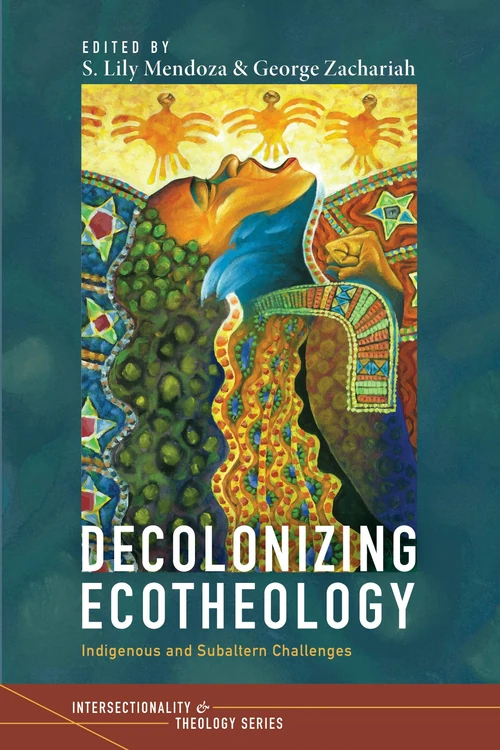
Decolonizing Ecotheology
Indigenous and Subaltern Challenges
- Theology
- Ethics, Culture & Social Issues
- Publisher: Pickwick Publications (Wipf and Stock)
- Published: 2022
FritzSearch.com earns a commission on purchases made through Bookshop.org links.
Publisher's Description
Decolonizing Ecotheology: Indigenous and Subaltern Challenges is a pioneering attempt to contest the politics of conquest, commodification, and homogenization in mainstream ecotheology, informed by the voices of Indigenous and subaltern communities from around the world. The book marshals a robust polyphony of reportage, wonder, analysis, and acumen seeking to open the door to a different prospect for a planet under grave duress and a different self-assessment for our own species in the mix. At the heart of that prospect is an embrace of soils and waters as commons and a privileging of subaltern experience and marginalized witness as the bellwethers of greatest import. Of course, decolonization finds its ultimate test in the actual return of land and waters to precontact Indigenous who yet have feet on the ground or paddles in the waves, and who conjure dignity and vision in the manifold of their relations, in spite of ceaseless onslaught and dismissal. Their courage is the haunt these pages hallow like an Abel never entirely erased from the history. May the moaning stop and the re-creation begin!
Endorsements (3)
“A splendidly creative religious response to the planetary emergency that closes in upon us. These essays from voices everywhere are radical in all the right ways. May their tribe increase, quickly!”
“There has long been talk that the shift in the geographic center of gravity in world Christianity will also change the landscape of Christian theology. With this volume, such change becomes clearly evident. Here we find conversation across the many global divides but from a point of departure amid those resisting the ‘CO2lonization’ of land, oceans, and climate.”
“This is a bold intervention in ecotheology, which often neglects Indigenous and subaltern perspectives and politics. It provides new vocabularies, semantics, and visions for theology and fresh approaches to rituals and practices. This is essential reading for decolonizing our minds and habits and for new insights to fight climate crisis.”
See something wrong on this page? Report a problem