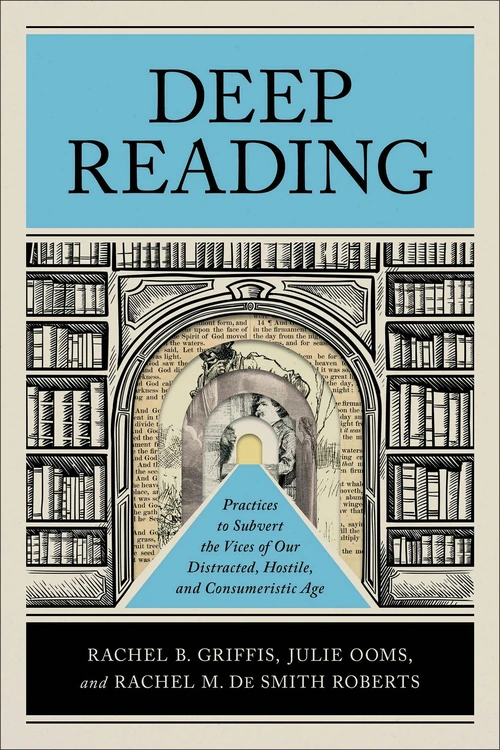
Deep Reading
- Theology
- Publisher: Baker Academic (Baker Publishing Group)
- Published: 2024
FritzSearch.com earns a commission on purchases made through Bookshop.org links.
Publisher's Description
Arlin G. Meyer Book Award WinnerChristianity Today 2025 Book Award Finalist (Culture, Poetry, and the Arts)"Show[s] how deep reading habits help us manage distraction and bring about individual and communal flourishing."--Christianity TodayThis book helps readers develop practices that will result in deep, formative, and faithful reading so they can contribute to the flourishing of their communities and cultivate their own spiritual and intellectual depth. The authors present reading as a remedy for three prevalent cultural vices--distraction, hostility, and consumerism--that impact the possibility of formative reading. Informed by James K. A. Smith's work on "the spiritual power of habit," Deep Reading provides resources for engaging in formative and culturally subversive reading practices that teach readers how to resist vices, love virtue, and desire the good. Rather than emphasizing the spiritual benefits of reading specific texts such as Dante's Divine Comedy or Adventures of Huckleberry Finn, the authors focus on the practice of reading itself. They examine practices many teachers, students, and avid readers employ--such as reading lists, reading logs, and discussion--and demonstrate how such practices can be more effectively and intentionally harnessed to result in deep reading. The practices apply to any work that is meant to be read deeply.
Endorsements (5)
“This book eloquently joins the other voices calling us to soul-forming kinds of reading that can resist our descent into superficiality and hostility. Importantly, it goes beyond them in describing not just the texts we should read or the virtues we should seek but the actual practices that might get us there. All those who use text to teach others should read it. Anyone else who cares about reading and spiritual growth should join them.”
“Deep Reading ought to be read and wrestled with by all those who want to read carefully and well, and it’s particularly essential for those tasked with guiding others’ reading in the classroom, the church, or the home. With its wealth of creative and practical examples, this book will enliven our efforts to read redemptively. In a culture where words more often cater to vicious appetites than challenge us to cultivate virtuous dispositions, this book is sorely needed.”
“Drawing from years of experience and research, Deep Reading offers insights, approaches, and practices to equip readers and teachers of readers. The book not only instructs—it inspires. I wish I had this work when I began teaching thirty years ago. It’s not only a book for teachers; it’s a book for all readers who desire to read deeply and to live deeply as well.”
“This well-researched and highly engaging book by three seasoned English professors provides both theological impetus and practical guidance for becoming wise, hospitable readers who read to gain wisdom, an empathetic imagination, and a greater capacity for love. Deep Reading is both timely and timeless as it highlights contemporary manifestations of the historical vices of ‘distraction,’ ‘hostility,’ and ‘consumerism’ that hinder attentive, active reading. These three educators both argue and illustrate the many ways in which ‘deep reading is an antidote to the vices of our age.’ Deep Reading is highly recommended for any lovers of books, especially educators; we all have much more to learn about embodied, engaged, deeply human reading.”
“While Christian literary approaches frequently are concerned with what specific texts should be read (canon wars) or their compatibility with Christianity (worldview critique), Deep Reading contributes to an important new and newly critical genre that views reading as a spiritual practice: a subversive activity contesting modern distraction, polarization, and consumerism. This jewel of a book will speak to readers of all sorts and inspire them to engage in deep, open, and generous reading.”
See something wrong on this page? Report a problem