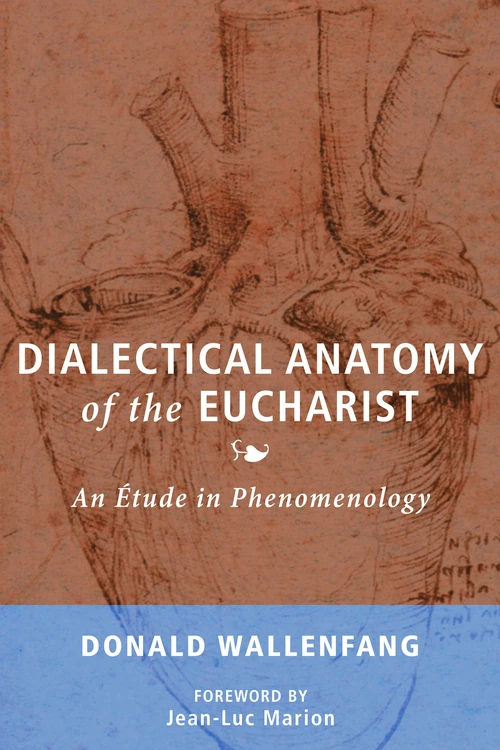
Dialectical Anatomy of the Eucharist
An Étude in Phenomenology
- Theology
- Publisher: Cascade Books (Wipf and Stock)
- Published: 2017
FritzSearch.com earns a commission on purchases made through Bookshop.org links.
Publisher's Description
For centuries, Christian theology has understood the Eucharist in terms of metaphysics or in protest against it. Today an opening has been made to imagine the sacrament through the method of phenomenology, bringing about new theological life and meaning. In Dialectical Anatomy of the Eucharist, Donald Wallenfang conducts a sustained analysis of the Eucharist through the aperture of phenomenology, yet concludes the study with poetic and metaphysical twists. Engaging the work of Jean-Luc Marion, Paul Ricoeur, and Emmanuel Levinas, Wallenfang proposes pioneering ideas for contemporary sacramental theology that have vast implications for interfaith and interreligious dialogue. By tapping into the various currents within the Judeo-Christian tradition--Jewish, Catholic, Orthodox, and Protestant--a radical argument is developed that leverages the tension among them all. Several new frontiers are explored: dialectical theology, a fourth phenomenological reduction, the phenomenology of human personhood, the poetics of the Eucharist, and a reinterpretation of the concept of gift as conversation. On the whole, Wallenfang advances recent debates surrounding the relationship between phenomenology and theology by claiming an uncanny way out of emerging dead ends in philosophical theology: return to the fray.
Endorsements (3)
“In this bold and provocative book, Wallenfang reengages the thought of three contemporary philosophical giants--Marion, Ricoeur, and Levinas--in the work of revivifying Catholic doctrines of the Eucharist. With its innovative approach to thinking the Eucharist as both manifestation and proclamation, and its refashioning of a dialectical process without Aufhebung, readers will ultimately find Dialectical Anatomy of the Eucharist challenging in its use of an erotic eucharistic phenomenology and claim for absolute truth.”
“This book offers a fresh approach to our theological understanding of the Eucharist by providing a new philosophical underpinning. It really is a breathtaking approach that is sure to increase the profundity of our appreciation of the Eucharist, useful for theologians, philosophers, and other interested readers alike.”
See something wrong on this page? Report a problem