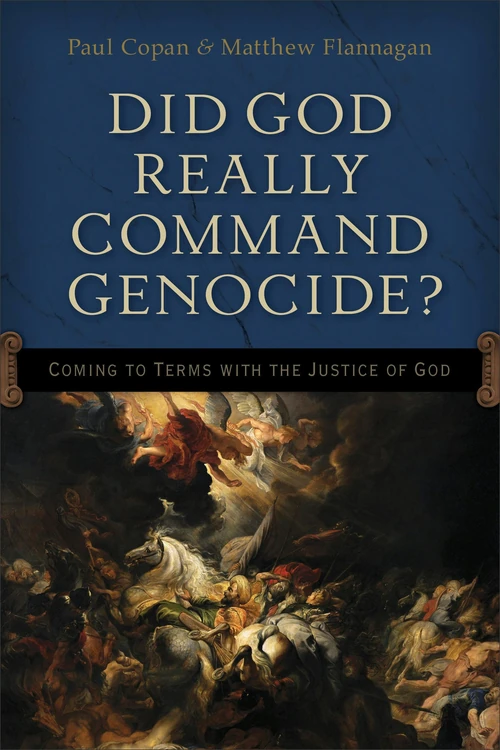
Did God Really Command Genocide?
- Biblical Studies & Commentaries
- Apologetics
- Publisher: Baker Books (Baker Publishing Group)
- Published: 2014
FritzSearch.com earns a commission on purchases made through Bookshop.org links.
Publisher's Description
A common objection to belief in the God of the Bible is that a good, kind, and loving deity would never command the wholesale slaughter of nations. Even Christians have a hard time stomaching such a thought, and many avoid reading those difficult Old Testament passages that make us squeamish. Instead, we quickly jump to the enemy-loving, forgiving Jesus of the New Testament. And yet, the question doesn't go away. Did God really command genocide? Is the command to "utterly destroy" morally unjustifiable? Is it literal? Are the issues more complex and nuanced than we realize? In the tradition of his popular Is God a Moral Monster?, Paul Copan teams up with Matthew Flannagan to tackle some of the most confusing and uncomfortable passages of Scripture. Together they help the Christian and nonbeliever alike understand the biblical, theological, philosophical, and ethical implications of Old Testament warfare passages. Pastors, youth pastors, campus ministers, apologetics readers, and laypeople will find that this book both enlightens and equips them for serious discussion of troubling spiritual questions.
Endorsements (6)
“Copan and Flannagan address the arguments of the atheists who use divine violence in the Bible to undermine belief and confidence in God. Not only are they adept at biblical interpretation and philosophy as they effectively counter this challenge, but they also write in a deeply compelling way that will appeal to both students and laypeople.”
“In their wide-ranging book, Copan and Flannagan go beyond standard treatments of Old Testament warfare; they incorporate biblical, theological, philosophical, ethical, legal, and historical perspectives on a much-debated but often-misunderstood topic. This volume makes important strides forward in laying out a case for the coherence of divine command theory in connection with these Yahweh-war texts.”
“This is a very lucid and helpful discussion of this troubling topic.”
“This brave, hard-nosed, and wide-ranging study constitutes a serious attempt at facing all the varied aspects of a question that troubles so many people. Well done!”
“As a full-scale follow-up to the excellent popular treatment of the topic in Is God a Moral Monster?, this book provides the most thorough and comprehensive treatment of the problem of violence in the Old Testament that I have encountered. The authors tackle the aggressive charges of the new atheists, as well as other equally sceptical but less strident critics of ‘the God of the Old Testament.’ And they do so with a blend of careful biblical exegesis and incisive moral argumentation. The book reaches deep, but remains readable, and the summaries at the end of every chapter are a great help in following the case as it is steadily built up. All of us who, in teaching or preaching the Old Testament, are constantly bombarded with ‘But what about the Canaanites?’ will be very grateful for these rich resources for a well-informed, gracious, and biblically faithful reply.”
“Does your god order you to slaughter your enemies? Did God’s command to the Israelites to kill the Canaanites set a pattern for human behaviour? Do Joshua’s wars justify the Crusades? Does the Bible promote violence against dissenters and opponents, as the Qur’an does? Reading the Bible as a modern book leads to false conclusions, the authors show clearly. Comparing writings from Assyria, Babylonia, Egypt, and the Hittites with biblical texts, they demonstrate the common use of exaggerated language—so that ‘all’ may not mean ‘every single person,’ for example—bringing clearer understanding of God’s apparently genocidal commands about the Canaanites. Carefully argued, with clear examples and helpful summaries, these chapters give Christians sound bases for defending and sharing their faith in the God of love, justice, and forgiveness. This is an instructive and very welcome antidote to much current thought.”
See something wrong on this page? Report a problem