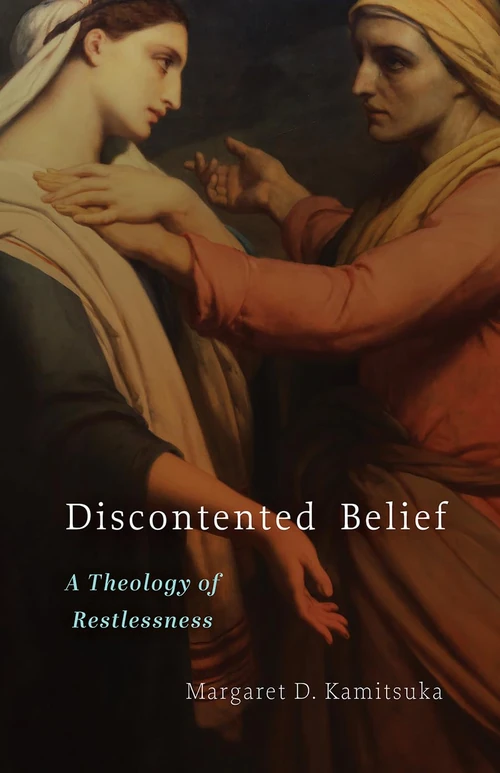
Discontented Belief
A Theology of Restlessness
- Theology
- Publisher: Fortress Press (Augsburg Fortress)
- Published: 2026
FritzSearch.com earns a commission on purchases made through Bookshop.org links.
Publisher's Description
Popular culture promotes happy mindfulness, academe considers happiness a serious topic of research, and theologies of Christian joy proliferate. The real and pervasive experience of discontentment is overlooked in both the secular and religious focus on contentment. Discontented Belief demonstrates that discontentment has a religious impact and theological significance. The book analyzes the variety and ubiquity of discontentment by using sources including the Bible, patristic writings, poetry and literature, psychoanalytic theory. Augustine experienced discontentment as a restless unmet desire that drew him to God. In Flannery O'Connor's fiction, it precedes a (sometimes violent) spiritual awakening. Discontentment spurs biblical female characters searching for religious belonging to courageous, even shocking, actions. Paul preached joy but voiced discontentment. The gospels narrate a Jesus vulnerable to discontentment, and God, traditionally understood, hovers outside of time and place. Attending to the phenomenon of human discontentment challenges traditional ways of thinking theologically. This book's engagement with various manifestations of discontentment charts new perspectives on God, the incarnation, redemption, and the power of the Holy Spirit. Discontented Belief offers religious searchers a way of believing when joy seems a distant dream and happiness elusive.
Endorsements (4)
“Margaret D. Kamitsuka ironically delights the mind and spirit as she draws the reader to contemplate the theological dimensions of discontentment. Drawing on sources from Augustine to T. S. Eliot and The Little Mermaid, she offers a quirky, mystical theology that embraces paradox and honors human longing. In recognizing that discontentment is both a curse and a gift—capable of awakening moral imagination and fueling transformation—she presents us with a fresh way to theologize this universal part of the human condition.”
“With characteristic attention to detail, Kamitsuka draws upon canonical Christian thinkers ranging from Augustine to Moltmann, psychoanalysis, biblical narratives, and fiction to deliver a rich set of reflections about discontentment. Readers willing to take an interdisciplinary plunge by considering considering the book of Ruth alongside The Little Mermaid, the theological significance of flirting, and what we can learn about both frustrated and realized desire in the twelfth-century relationship between Peter Abelard and Heloise will be rewarded for their efforts.”
“In clear and creative prose, Kamitsuka illuminates complex theoretical ideas around the intricacies of belief. Her restless theology offers honest assessments of the human struggle with the concepts of “God” and “belief.” By diving deep into biblical and other life and literary stories, Kamitsuka brings us the discontented feminist voices that show the necessity of resistance and protest to the patriarchal status quo. The importance of voice, spirit, ritual, body, desire, sex, birth, death, and the eternal all add to the theological imagination. Kamitsuka reminds the reader that discontent is essential for theology and the moral life.”
“This is a great book—utterly unputdownable—and that alone is rare for theology. With remarkable unity and daring, it weaves scripture, film, poetry, philosophy, and both traditional and contextual theologies into an interpretive frame of erotic, discontented desire, where restlessness itself becomes a generative force for resistance, meaning, and new life. Attentive to transgressive love stories, genitalia, and semiotic excess, the book opens blurred and resistant spaces that are fecund and empowering, offering a work of constructive theology that is intellectually rigorous, erotically charged, and genuinely pleasurable.”
See something wrong on this page? Report a problem