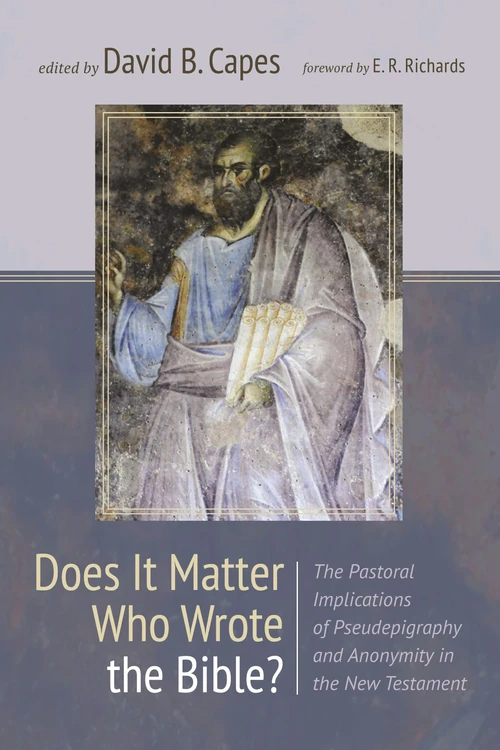
Does It Matter Who Wrote the Bible?
The Pastoral Implications of Pseudepigraphy and Anonymity in the New Testament
- Biblical Studies & Commentaries
- Publisher: Pickwick Publications (Wipf and Stock)
- Published: 2025
FritzSearch.com earns a commission on purchases made through Bookshop.org links.
Publisher's Description
Students in seminary or graduate theology programs learn that some books in the Bible are anonymous. Their professors will make the point that many Pauline letters have disputed authorship and may in fact not be written by Paul. Students will also learn about the practice of pseudonymity in the world of the Bible and how some Gospels or letters are written under a false name. Now for those who become pastors or church leaders, what are they to do with what they learn? Do they teach their congregants about these authorship questions? Do they ignore that part of their training as irrelevant to the task? Do they avoid teaching or reading publicly from disputed books? Do these questions not matter in the end because the church settled on the canon? This book aims to address these pastoral challenges. An international group of scholars from universities, seminaries, and graduate theology programs convened to discuss these matters at the Lanier Theological Library in May 2022. These essays represent how many faculty are wrestling with the pastoral implications of anonymity and pseudonymity in the New Testament.
Endorsements (3)
“The question of pseudonymity or anonymity is generally not problematic for pastors in Africa. Most tend to have a very high view of Scripture as both sacred and powerful. However, as the landscape of the global church changes, questions about authorship must be addressed if pastors are to be empowered to serve effectively. This book achieves that by providing valuable insights and anticipating issues that can become problematic for the future of the global church.”
“The gap between scholarly interests and the needs of the church are no more evident than the question of biblical authorship. When it comes to preaching God’s word, does it matter whether John the apostle is the author of the Fourth Gospel? Should church members care whether the so-called pastoral epistles are authentic letters of Paul? Since biblical interpreters tend to rely upon a canon within a canon, should critical scholarship determine which parts of Scripture ought to carry more weight for matters of faith and practice? Gathering a team of experts who offer their academic work in service of the church, David Capes hopes to bridge the gap by exploring the historical, social, theological, canonical, hermeneutical, and spiritual implications of anonymity, pseudonymity, and scriptural authority. A hefty volume of engaging reflections and sound advice, scholars and pastors need to read this book.”
See something wrong on this page? Report a problem