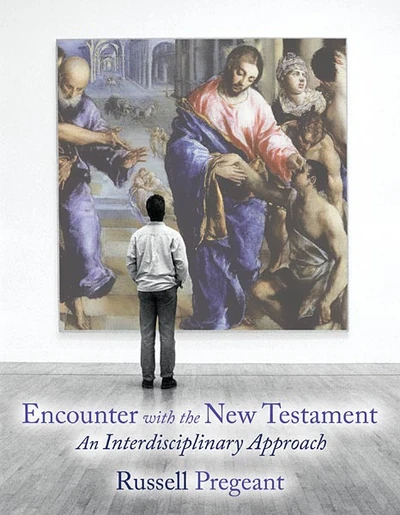
Encounter with the New Testament
An Interdisciplinary Approach
- Biblical Studies & Commentaries
- Publisher: Fortress Press (Augsburg Fortress)
- Published: 2009
FritzSearch.com earns a commission on purchases made through Bookshop.org links.
Publisher's Description
Click below to watch Russell Pregeant discuss his introductory textbook, Encounter with the New Testament. Find more videos like this on Encounter with the New Testament An exemplary text, Russell Pregeant's Engaging the New Testament (1995) has provided a rich interdisciplinary New Testament introduction for upper–level and graduate students, incorporating a wide range of methods—literary, historical, psychological, theological, and social–scientific, and critically perceptive introductions to each of the New Testament writings. Encounter with the New Testament adapts and abridges the best features of that textbook for beginning undergraduate students — surveying approaches to biblical studies, and discussing historical and cultural backgrounds, the historical Jesus, and the rise of the resurrection faith with attention to extracanonical materials. The textbook includes charts, maps, illustrations, reading suggestions, and more.
Endorsements (2)
“One of the most exciting books available for introducing students to the New Testament at the beginning of the twenty-first century. Firmly and accurately grounded in literary and historical understanding, it dynamically leads the student into issues that have been emerging in recent theological, ethic, and social scientific, theological, and psychological discussion and debate about early Christianity and its heritage into the present. A wonderful contribution.”
“This book could have been only written by a seasoned scholar, experienced teacher, and skilled writer. Russell Prageant is all of these. He offers an informative, balanced, and eminently clear introduction to the writings of the New Testament and also to various hermeneutical strategies.”
See something wrong on this page? Report a problem