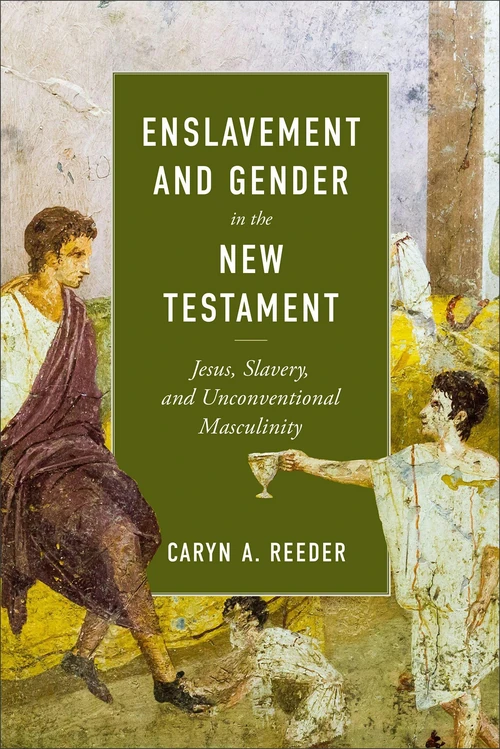
Enslavement and Gender in the New Testament
- Biblical Studies & Commentaries
- World Religions
- History & Biography
- Publisher: Baker Academic (Baker Publishing Group)
- Published: 2026
FritzSearch.com earns a commission on purchases made through Bookshop.org links.
Publisher's Description
In the first-century Roman Empire, men generally held privileged status. Masculinity was conceived as exercising power over both self and others through self-discipline, violence, and authority in the community and household. This paradigm often proved socially problematic and fostered injustice and abuse of those in socially weaker positions. Masculinity was defined in contrast with femininity, childishness, and (significantly) slavery. Enslavement was masculinity's opposite, entailing a lack of power and autonomy over oneself and others. Against this background, the New Testament uses the metaphor of slavery to describe both Jesus and what he expected of his disciples. In doing so, it redefined masculinity for the Christian. This well-researched book by an expert on gender and the New Testament explores slavery and gender in the Roman Empire and uses that background to interpret key passages that employ enslavement imagery, such as Mark 10:41-45, Luke 22:24-27, Philippians 2:1-11, and 1 Peter 2:18-25. Further, it helps readers understand how enslaved first-century Christians may have interpreted and applied these texts. The book's conclusions address the significance of "unconventional masculinity" for Christology, discipleship, and church leadership.
Endorsements (2)
“Caryn Reeder's Enslavement and Gender in the New Testament is a bold, meticulous, and morally serious study of slavery, Jesus, and unconventional masculinity. With careful attention to Roman enslavement, gendered honor, footwashing, crucifixion, and the unsettling language of slavery in Paul, 1 Peter, and the Gospels, Reeder rejects superficial appeals to 'servant leadership' and offers readers a far richer account of discipleship, power, and status. Historically rigorous, exegetically compelling, and theologically consequential—this book is essential reading for New Testament scholars, scholars of gender and slavery in antiquity, theologians, pastors, and serious readers of Scripture.”
“For scholars and readers interested in the Roman slave system and its significance for the early Christian movement, Enslavement and Gender in the New Testament is essential reading. With clarity and sophistication, Caryn Reeder examines the intersections of enslaved bodies, masculinity, and the social imagination of slavery in Roman antiquity. Drawing carefully on primary sources, she illuminates the ideological assumptions, social customs, and daily practices that shaped this world. Her analysis shows how the figure and lived reality of the enslaved person (including in metaphorical depictions of Jesus) exposed and challenged Roman masculine ideals. I enthusiastically recommend this contribution to slavery, gender, and early Christian studies.”
See something wrong on this page? Report a problem