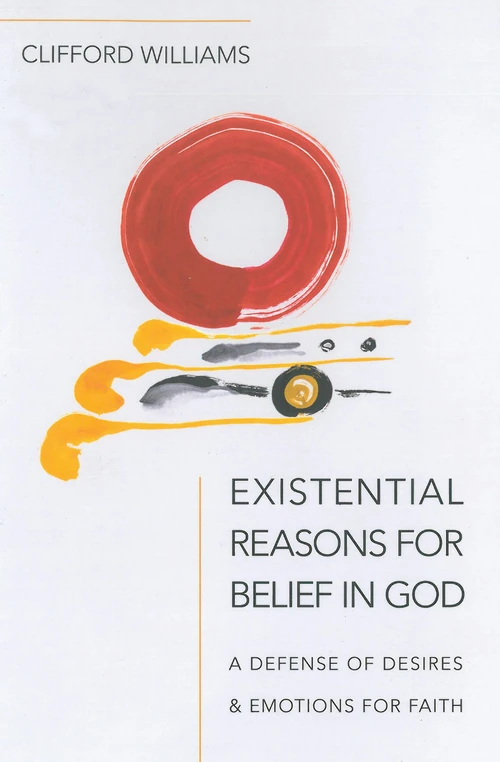
Existential Reasons for Belief in God
A Defense of Desires & Emotions for Faith
- Apologetics
- Publisher: Wipf and Stock
- Published: 2020
FritzSearch.com earns a commission on purchases made through Bookshop.org links.
Publisher's Description
Lived faith involves doctrines, evidences and rational coherence--but it includes much more. Philosopher Clifford Williams puts forth an argument as to why certain needs, desires and emotions have a legitimate place in drawing people into faith in God. Addressing the strongest objections to these types of grounds for faith, he shows how the personal and experiential aspects of belief play an important part in coming to faith and in remaining a believing person.
Endorsements (4)
“Clifford Williams's work is a powerful defense of the role that needs and emotions play in the formation and preservation of religious faith. Williams gives a rigorous account of the way reason and emotion work together to produce a faith that is both rational and personal. Although the book is philosophically first-rate, it is written so clearly and powerfully that any thoughtful person can follow the argument. The inclusion of many personal stories gives the book added punch. Williams not only thinks about emotions but appeals to our emotions in an engaging manner.”
“Clifford Williams has composed an engaging, profoundly personal account of the reasons for belief in the God of Christianity. This is decidedly not a detached or merely academic work but a book that speaks directly to the needs, emotions and best thinking of its readers.”
“Williams breathes new life into the provocative view that human emotions play a central role in legitimate belief in God. Drawing from Kierkegaard and Unamuno, he dares to portray belief in God as something much more personally robust and engaging than a mere solution to an intellectual puzzle. The book will benefit all serious inquirers regarding belief in God.”
“Echoing thinkers such as Pascal and Kierkegaard, Williams's 'existential argument' shows that Christian faith can be justified--we may properly believe--just because faith satisfies certain existential needs. Williams develops his argument in a philosophically rich way, augmented with examples showing how for many people faith is engendered and sustained by existential arguments. Deep insights abound as Williams considers and rejects common objections to existential arguments. In the end, Williams doesn't reject evidential arguments, but urges us to pay closer attention to our emotional needs and their role in faith formation. I highly recommend this significant addition to the apologetic literature,”
See something wrong on this page? Report a problem