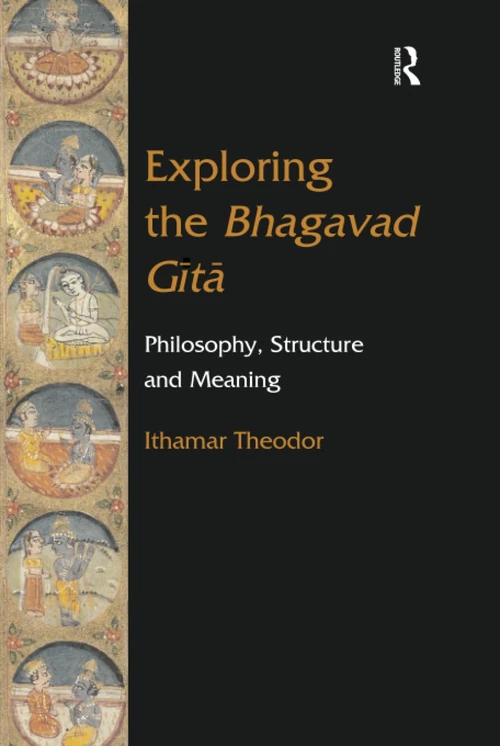
Exploring the Bhagavad Gita
Philosophy, Structure and Meaning
- World Religions
- Publisher: Routledge
- Published: 2010
FritzSearch.com earns a commission on purchases made through Bookshop.org links.
Publisher's Description
The Bhagavad Gita is a unique literary creation but deciphering its meaning and philosophy is not easy or simple. This careful study of the Bhagavad Gita approaches the ancient text with a modern mind and offers a unifying structure which is of a universal relevance. Combining the philosophical-theoretical with the ethical-practical, Ithamar Theodor locates his study within comparative theology and identifies the various layers of meaning. The full text of the Bhagavad Gita is presented in new translation, divided into sections, and accompanied by in-depth commentary. This book makes the Bhagavad Gita accessible to a wide variety of readers, helping to make sense of this great spiritual classic which is one of the most important texts of religious Hinduism.
Endorsements (4)
“This is potentially one of the most significant books to emerge in recent times on how to read the Gita, for it provides a clear way forward to make coherent sense of one of the most important yet methodologically intractable texts of religious Hinduism. I found this book an illumining experience.”
“A fascinating book which throws new light on the Gita, and should help to make it more accessible to those who wish to read this great spiritual classic.”
“approaches the ancient Bhagavad Gita with a modern mind and finds much in it that deserves our attention. Locating his study within Comparative Theology and identifying the various layers of meaning in the text will help those unacquainted with it to find their way through this complex classic. Combining the philosophical-theoretical with the ethical-practical the author shows the universal relevance of the Gita's teaching.”
“Since Sarvepalli Radhakrishnan nobody has offered as penetrating a study of this classic as Ithamar Theodor has done.”
See something wrong on this page? Report a problem