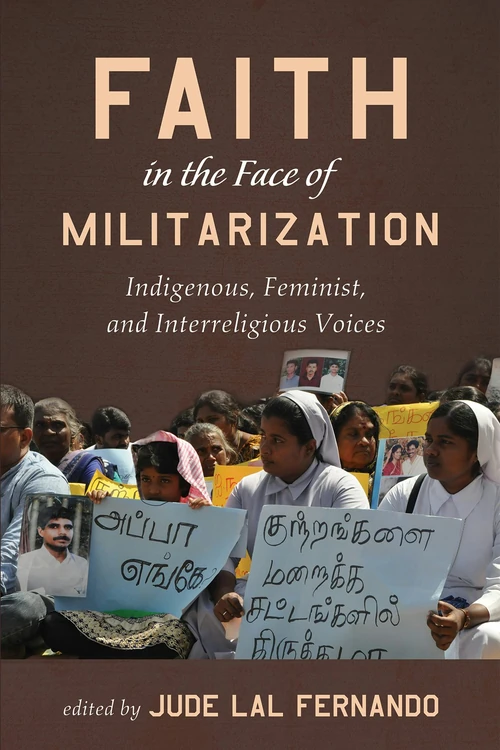
Faith in the Face of Militarization
Indigenous, Feminist, and Interreligious Voices
- Ethics, Culture & Social Issues
- Publisher: Pickwick Publications (Wipf and Stock)
- Published: 2021
FritzSearch.com earns a commission on purchases made through Bookshop.org links.
Publisher's Description
What does believing mean in the face of empire and militarization? These essays articulate the critical and liberating consciousness shared by oppressed peoples across the world, arising from a faith in the God of the oppressed, expressed in radically diverse ways, and resisting the imperialist deities of materialism (read: economic growth), racism, and militarization that falsely appear as the saviors of humanity. The authors confront these false gods--which form the modern empire--worshiped by the most dominant militarized states in the world and followed by their allied states even in the midst of a worldwide pandemic. Out of the eleven articles, two are written by critical political analysts with an anti-colonial lens while recognizing the importance of faith in resistance. The rest are written by theologians who critically reflect on their faith within the context of empire and militarization in their societies. Militarization is among the most brutal forms of oppression on the resisting peoples. The theologies that have emerged from critical reflections on their collective experiences are grounded on a material spirituality as opposed to materialistic, racist, and militaristic godlessness. This collection has emerged out of creative and transformative practices in Africa, Asia, Latin America, the Pacific, and the US. The essays are divided it into four sections in recognizing some of the key features of material spirituality; indigenous, feminist and interreligious voices, and horizontal solidarity. With contributions from: Michael Lujan Bevacqua Wati Longchar Nidia Arrobo Rodas Rasika Sharmen Pieris Lilian Cheelo Siwila Young-Bock Kim Dan Gonzales-Ortega Erin Shea Martin Mark Braverman Joshua Samuel Phil Miller
Endorsements (6)
“In the face of increasingly sophisticated militarization and the neocolonial realities that go along with it, material spiritualities and new forms of solidarity have been emerging and are making a difference. This is good news not only for all those most affected, who embody the crucified and risen Christ at the same time, but for all of us who refuse to give up the conviction that another world is possible.”
“An important resource that analyzes one of the biggest challenges and largest industries of our time, militarization. The book offers critical faith perspectives and amplifies prophetic voices that transcend geographical, religious, racial, and cultural boundaries. It is a testimony to a culture of life in the face of war, death, and destruction.”
“Prophetic and urgently needed, this book shows how militarization affects the world’s most vulnerable peoples and what people of different faiths must do together to resist the violence of empire. It offers a rich spirituality of resistance and rekindles hope amidst terror and suffering. I highly recommend it for scholars and activists and anyone who wants to remain hopeful.”
“This book diagnoses the mutations of militarization (as metaphor and as practice) in traditions, Scriptures, teachings, and religions, and prescribes concoctions to help survivors persevere, take a stand, and push back. The voices in this book test old remedies and advocate alternative ones that take into account Indigenous, women, feminist, liberation, and decolonizing ingredients. This book is a must-read for theologians and researchers who are curious about militarization and its superspreader—coloniality.”
“How do the poor and the oppressed of the world gather the energy to resist invincible empires and military industrial complexes? How do they walk the road to human freedoms? Read this book to find out.”
See something wrong on this page? Report a problem