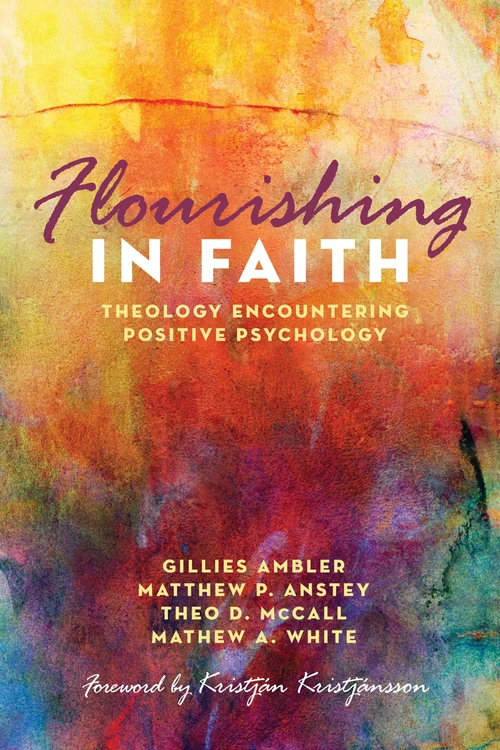
Flourishing in Faith
Theology Encountering Positive Psychology
- Theology
- Publisher: Cascade Books (Wipf and Stock)
- Published: 2017
FritzSearch.com earns a commission on purchases made through Bookshop.org links.
Publisher's Description
Flourishing in Faith: Theology Encountering Positive Psychology explores the fascinating dialogue between two scholarly traditions concerned with personal wellbeing, Christian theology and Positive Psychology, primarily from the perspective of theology. Although each works within different paradigms and brings different fundamental assumptions about the nature of the world, both are oriented toward that which leads to human flourishing and contentment. In such an encounter, can both disciplines learn from one another? Do they challenge each other? How can they enrich and or critique each other? With the widespread emergence of Positive Psychology in educational, church, and community settings across the world, many of which self-identify with the Christian tradition, many are wondering how this new branch of psychology integrates with traditional Christian belief and practice. This groundbreaking book explores this question from a diversity of perspectives: theology, biblical studies, education, psychology, social work, disability studies, and chaplaincy, from scholars and practitioners working in Australia and the United States.
Endorsements (3)
“The relationship between faith and positive psychological strengths of character has been under-explored in recent social science. The editors and authors of this much-needed and well-researched volume take a significant step towards overcoming this lacuna. I strongly recommend this book to readers.”
“This is a very important book. Far too often, psychologists of all hues reject spirituality out of hand. But I have always argued that the highest levels of happiness, joy indeed, are only experienced through a sense of profound harmony with oneself, with others, with nature, and the universe. This book breaks new ground and should be read with open minds by both psychologists and theologians.”
See something wrong on this page? Report a problem