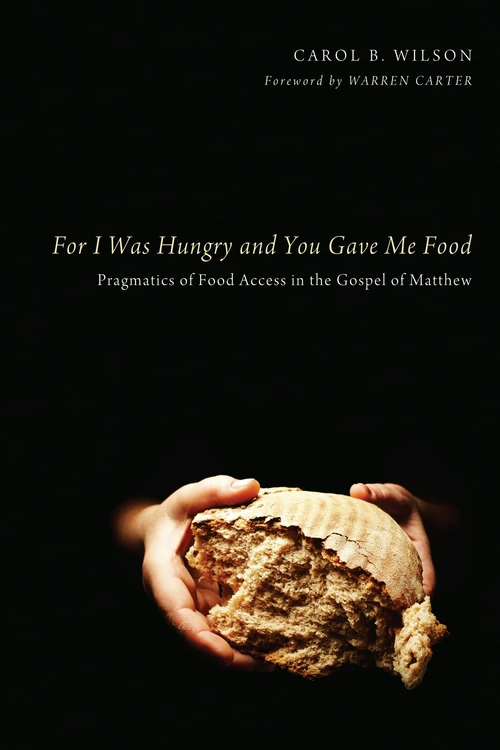
For I Was Hungry and You Gave Me Food
Pragmatics of Food Access in the Gospel of Matthew
- Biblical Studies & Commentaries
- Publisher: Pickwick Publications (Wipf and Stock)
- Published: 2014
FritzSearch.com earns a commission on purchases made through Bookshop.org links.
Publisher's Description
In the first century, endemic food shortages left 25 percent of the population below subsistence level and another 30 percent at risk of slipping below subsistence. In the face of such serious food shortages, the Gospel of Matthew advocates for a society in which all people can have access to sufficient food. Matthew critiques first-century practices and attitudes of both aristocrats and peasants that helped or hindered that goal. It does this by depicting Jesus teaching and performing positive practices that provided the Matthean community with an example to emulate, as well as condemning some negative practices and attitudes. For I Was Hungry and You Gave Me Food provides a pragmatic lens and a new descriptive paradigm of food access in the first century. The perspective and model are useful for analyzing passages concerned with life-and-death issues of the Matthean community--or situations for any other Christian community, past or present. Should not every person have enough food to sustain physical life?
Endorsements (4)
“Wilson offers solid, multifaceted research and analysis of access to food, which was particularly problematic for the majority of the people in the Roman Empire. In this illuminating context she presents a clear narrative interpretation of Matthew's concern that the hungry have food.”
“Carol Wilson gives an exciting rereading of Matthew. The Gospel advocates for a society in which all people would have access to sufficient food. Matthew 19-20 says that in famines husbands must not divorce but feed their wives, and wealthy householders should hire people who want to work. Carol's well-supported exegesis will inform academics and pastors.”
“Wilson's social-scientific study of food distribution in the cultures and communities in which the Gospel of Matthew was written provides important insight into the economic practices of the Roman Empire. With this study, she anchors in solid analysis of core biblical traditions the ethical passion of contemporary Christian communities in the fight against world hunger.”
See something wrong on this page? Report a problem