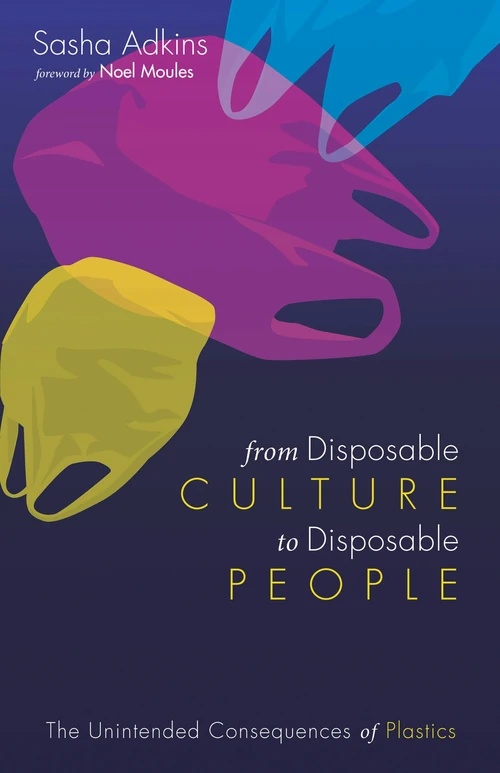
From Disposable Culture to Disposable People
The Unintended Consequences of Plastics
- Ethics, Culture & Social Issues
- Publisher: Resource Publications (Wipf and Stock)
- Published: 2018
FritzSearch.com earns a commission on purchases made through Bookshop.org links.
Publisher's Description
We cannot solve the problem of plastics simply by recycling more. The plastic in the oceans, the soil, and our bodies is a symptom of the broader problem of disposable culture. We are not just treating objects as disposable--we are treating ourselves and each other as disposable, too. The story of plastics parallels the story of my life, from my childhood living aboard a sailboat to graduate work on plastics and endocrine disruption, and ultimately teaching about plastics, not only as a complex set of chemicals, but as a spiritual poison.
Endorsements (4)
“Sasha weaves a narrative that explores relationships between the material and social sciences with unexpected connectivity, powerfully referencing personal experience. . . . Sasha’s book is an intellectual deep dive that will strengthen your belief that single-use plastics must cease to be.”
“This compelling study connects crucial dots between theology and biochemistry, our waste-stream and bloodstream, and the economics of disposability and the anthropology of instrumentality. It shows how plastics mirror both our technological ingenuity and our dysfunctional, addictive, and ecocidal disingenuousness. Adkins argues that the antidote is to rebuild a culture of relationship—beginning with our own trash. I commend this essay for study groups, because the personal and political problem of plastics touches each of us and is determining our collective fate.”
“From Disposable Culture to Disposable People is a passionate cry from scientist and scholar Sasha Adkins demanding that we recognize the poisoning of our planet by those very convenient plastics embedded ubiquitously and deeply within our culture.”
See something wrong on this page? Report a problem