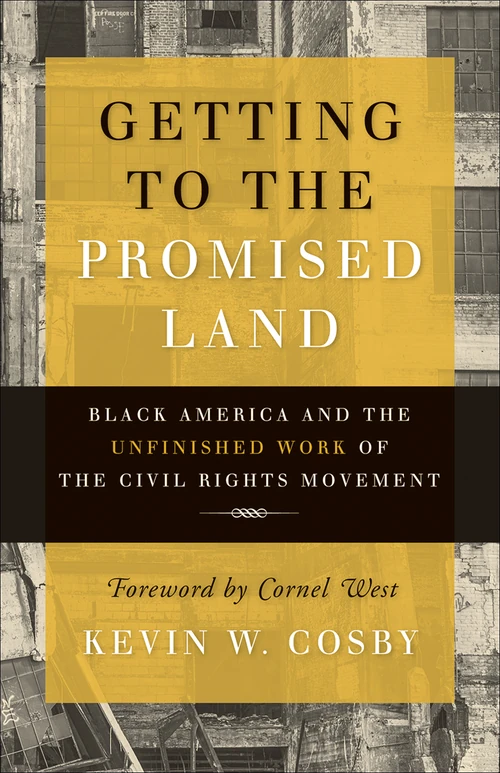
Getting to the Promised Land
Black America and the Unfinished Work of the Civil Rights Movement
- Ethics, Culture & Social Issues
- Publisher: Westminster John Knox
- Published: 2021
FritzSearch.com earns a commission on purchases made through Bookshop.org links.
Publisher's Description
Too often, all oppressed people in America are lumped together under the moniker “people of color,” as if each group’s experience under the yoke of systemic racism has the same economic and social repercussions. But the American Descendants of Slavery (ADOS) hold a unique claim to economic and reparative justice: for ADOS, after all, is the only group whose ancestors were forcibly brought to America, enslaved, built much of the wealth of the country, yet continue to be specifically excluded from the same social, political, and economic rights of other Americans. To that end, Rev. Dr. Kevin W. Cosby lays out the first theology of the ADOS movement, turning the traditional lens of Black liberation theology from Moses leading escaped Hebrew slaves in Exodus to other biblical leaders like Solomon, Daniel, and Nehemiah. In the stories of Nehemiah and other biblical leaders, Cosby finds inspiration on how to rebuild Black America including the necessity of government reparations for ADOS. Cosby calls all Americans to move from a place of relative nonengagement and detachment to a place of active support of ADOS’s efforts for justice and healing. Perfect for book clubs! Download the Reading Group Guide.
Endorsements (5)
“Dr. Cosby’s fundamental work is lighting a path for pastors, activists, and community members who are committed to an interpretation of Scripture that specifically defines our predicament as a tyrannized group and daringly confronts our oppressors.”
“Dr. Cosby takes the foundational elements of ADOS concepts and weaves in theology with unique and daring perspective. Reading Getting to the Promised Land definitely pushes us forward on the road to reparative justice.”
“This is a brilliantly thoughtful, novel approach to the reparations debate that should be required reading for everyone with even a minimal investment in the reparations debate.”
“This hard-hitting book is a welcome continuation of our education in the truth of our common history and is an urgent read for all those who care about the future of our society.”
“Cosby calls us to reorient our moral, ethical, and theological compass toward the distinct experience of descendants of slaves.”
See something wrong on this page? Report a problem