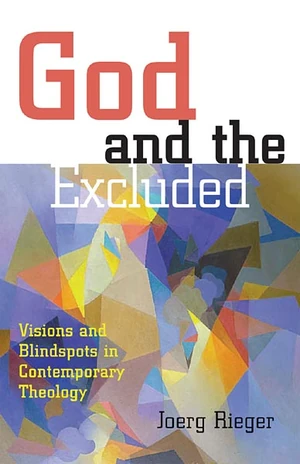
God and the Excluded
Visions and Blindspots in Contemporary Theology
- Theology
- Publisher: Fortress Press (Augsburg Fortress)
- Published: 2000
FritzSearch.com earns a commission on purchases made through Bookshop.org links.
Publisher's Description
Theology is fracturing along tension lines once hidden by the great modern consensus that reigned from Schleiermacher's day till our own. Now, all of it is in dispute: its starting point, its self-awareness, its claim to truth, its method and interaction with other disciplines and institutions in church, academy and society. Rieger offers an enlightening way to understand the chief strands or options in theology today and a valuable proposal for resituating theology around the crucial issue of inclusion. He sees four competing vectors at work in Christian today's theology: Theology of Identity (liberal theology, represented by Schleiermacher and founded in the self), Theology of Difference (dialectical theology, represented by Barth and founded in the Wholly Other), Theology and the Postmodern (postcritical theology, represented by Lindbeck and founded on the text), and Theology and the Underside (liberation theologies, represented by North American feminist theology). Further, Rieger goes on to propose that each of these is in some way exclusionary and elitist; the mass of humanity and the globe's most pressing problems do not invade this cathedral, and in some ways the market itself has replaced God. Religious thought can remain viable only when it is grounded in an openness that reaches beyond the global market and postmodern squabbles, critiques its own complicity in the situation, and resituates itself in express commitment to those left out of today's "gated community."
Endorsements (3)
“Rieger's God and the Excluded continues his pathbreaking work in constructive theology begun in Remember the Poor. As he critically rereads the major theological options from the perspective of the excluded members of our global society (that is, the other), Rieger demonstrates the parallel displacement of the divine Other. Through the intersection of perceptive social and theological analysis and guided by Lacanian theory, he issues a powerful call for liberating and transforming both contemporary theological discourse and oppressive socioeconomic and political structures.”
“Rieger's writing is surprisingly lucid and accessible, making the various theologies and the difficult issues he treats (hermeneutics and authority, modernity and postmodernity, self and society) comprehensible to the nonspecialist.”
“Taking his place in the hotly contested, antagonistically profiled debates in contemporary theology, Joerg Rieger turns out to be a sharpshooter in the fray and yet a surprisingly generous partner, holding out hope, not for a rapprochement but a new dance in which theologians learn from each other and the up-to-now 'others' what they can be and do. His rereading of the major contemporary options and his robust reconstruction recommend this book for all who are pained by the combative confusions of present-day theologies and who hope for a new commons for serving God's embrace fo those excluded from the global household.”
See something wrong on this page? Report a problem