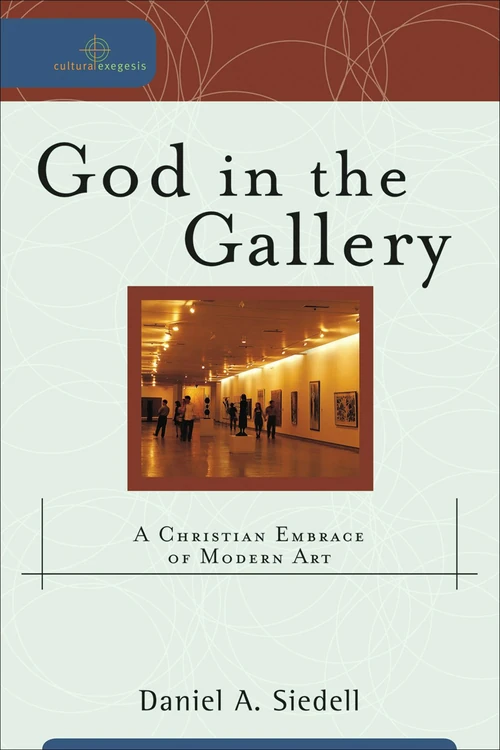
God in the Gallery
- Christian Living
- Theology
- Publisher: Baker Publishing Group
- Published: 2008
FritzSearch.com earns a commission on purchases made through Bookshop.org links.
Publisher's Description
Is contemporary art a friend or foe of Christianity? Art historian, critic, and curator Daniel Siedell, addresses this question and presents a framework for interpreting art from a Christian worldview in God in the Gallery: A Christian Embrace of Modern Art. As such, it is an excellent companion to Francis Schaeffer's classic Art and the Bible. Divided into three parts--"Theology," "History," and "Practice"--God in the Gallery demonstrates that art is in conversation with and not opposed to the Christian faith. In addition, this book is beautifully enhanced with images from such artists as Andy Warhol, Jackson Pollock, Enrique Martínez Celaya, and others. Readers of this book will include professors, students, artists, and anyone interested in Christianity and culture.
Endorsements (3)
“In these beautifully crafted essays, Siedell brings the eye of the curator, the intellect of the critic, and the passion of the believer to a much-misunderstood subject. The reader is rewarded with a clear, sharply critical, theologically astute, and decisive apologia for the essential contribution of contemporary art to the life of faith.”
“We’ve been waiting for this book for nearly forty years. Finally, a robust and unapologetically Christian engagement with contemporary art by an ‘insider’ to its world and conversation. Though Siedell invites us beyond the wooden ideal of ‘the Christian artist,’ at the same time he articulates a vision of artistic practice and criticism rooted in the church. He provides much-needed wisdom, modeling how Christians can charitably engage modern art. He also provides much-needed guidance for how Protestants can—and should—incorporate the arts in worship beyond the eclectic pastiche of the ‘hip.’ Required reading for emerging artists—and their teachers.”
“Finally! A book for contemporary Protestant communities that drinks deeply from the christological dogmas that arose out of the Byzantine iconoclastic controversy (eighth and ninth centuries). In a masterful way, Siedell shows the contemporary relevance of Nicaea II (AD 787) for modern artists and the worship practices of Western Christianity. Readers will discover an iconic worldview that is simultaneously incarnational, sacramental, and transcendent. More than a book, it is an event that celebrates the universal and timeless relevance of Orthodox icons for the twenty-first-century church—East and West.”
See something wrong on this page? Report a problem