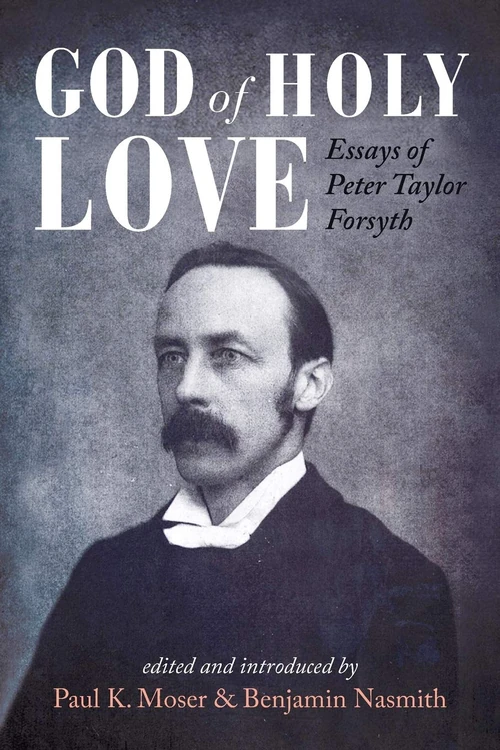
God of Holy Love
Essays of Peter Taylor Forsyth
- Theology
- Publisher: Pickwick Publications (Wipf and Stock)
- Published: 2019
FritzSearch.com earns a commission on purchases made through Bookshop.org links.
Publisher's Description
The God of Christian faith is, according to Peter Taylor Forsyth, a God of holy, righteous love. As a result, God's intervention in human life is morally robust, being in search of the transformation of its recipients toward holy love. Its high point is in the cross of Jesus Christ. This book contains twenty of Forsyth's essays that clarify the nature and manifestation of God's holy love. Forsyth contends that God is an active personal agent who desires interpersonal fellowship with humans, under the authority of divine holy love. He attends to the experience of God in moral conscience, where one can experience forgiveness and redemption by God. He challenges readers to consider whether their experience includes an encounter with a God who manifests holy love.
Endorsements (4)
“This collection of well-chosen and rewarding essays conveniently gathers into one volume both a valuable resource for any student of Forsyth’s and a fitting introduction to some themes of central concern to one of the best theological minds the English-speaking world has produced.”
“When I learned Moser and Nasmith had collected some of Forsyth’s theological gems, I was ecstatic. May this well-selected and well-introduced set of essays spark or renew interest in an unjustly neglected pastor-theologian!”
“Writing more than a century ago, P. T. Forsyth has much to teach us for the living of these days. This remarkable collection of essays offers fresh insight into the mind and heart of a theologian who experienced the ‘holy love’ of God and invites us to do the same.”
“Almost a century after his death, P. T. Forsyth’s theological voice is just as fresh and as relevant today as it ever has been. . . . This new selection of Forsyth’s essays should be welcomed and applauded not by students of historical theology alone, therefore, but by all those concerned to do constructive Christian theology for the twenty-first century.”
See something wrong on this page? Report a problem