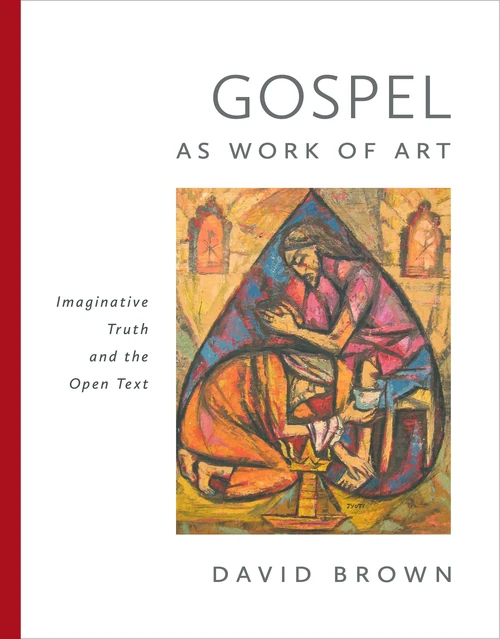
Gospel as Work of Art
Imaginative Truth and the Open Text
- Theology
- Publisher: Eerdmans
- Published: 2024
FritzSearch.com earns a commission on purchases made through Bookshop.org links.
Publisher's Description
A lushly illustrated, magisterial exploration of the imaginative truth of the gospel In the modern academy, truth and imagination are thought to be mutually exclusive. But what if truth can spring from other fonts, like art, literature, and invention? The legacy of the Enlightenment favors historical and empirical inquiry above all other methods for searching for truth. But this assumption constrains our theological explorations. Though the historicity of Jesus’s life, death, and resurrection is important, it is not the only thing that matters. For instance, is John’s Gospel any less “true” than the Synoptics just because it’s less historically accurate? David Brown challenges us to expand our understanding of the gospel past source criticism and historical Jesus studies to include works of imagination. Reading Scripture in tandem with works of art throughout the centuries, Brown reenvisions the gospel as an open text. Scholars of theology and biblical studies, freed from literalism, will find new avenues of revelation in Gospel as Work of Art. This volume includes over one hundred color illustrations.
Endorsements (2)
“This is a big book with big ideas. It is also at points profound. Anyone interested in Christian theology—in what it has been and what it might become—must ponder Brown’s wide-ranging, historically learned, beautifully illustrated, thought-provoking pages. Even the most erudite will find an education here.”
“In this beautifully illustrated and ambitious volume, David Brown convincingly argues that ‘reading’ the gospel through visual images indicates the inventive and imaginative nature of the gospel writers. Theologians, biblical historians, and art historians are challenged to consider this premise and rediscover the interconnectivity of word and image for today’s academic and Christian communities.”
See something wrong on this page? Report a problem