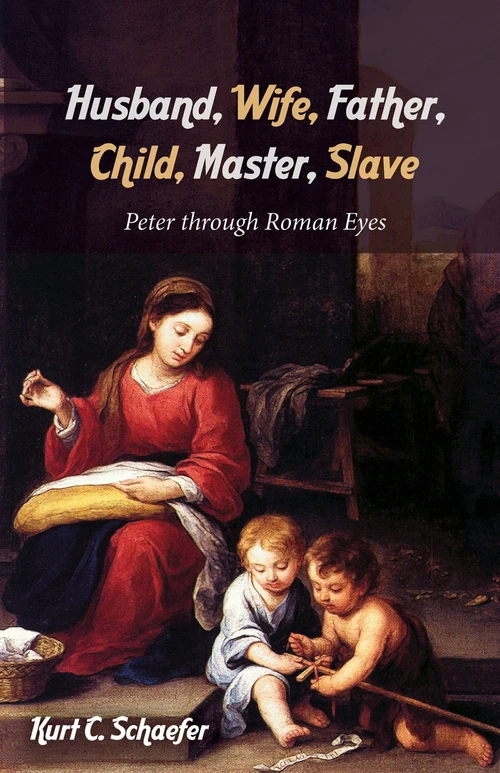
Husband, Wife, Father, Child, Master, Slave
Peter through Roman Eyes
- Biblical Studies & Commentaries
- Publisher: Wipf and Stock
- Published: 2018
FritzSearch.com earns a commission on purchases made through Bookshop.org links.
Publisher's Description
When the New Testament speaks of slaves and masters, is it affirming an institution that we find reprehensible? Biblical scholars across the theological and political spectrum generally conclude that the answer is "yes." And in the same passages the Bible seems to affirm male dominance in marriage, if not in society at large. This book meticulously places these passages, the Bible's "household codes," in their historical and literary context, focusing on 1 Peter's extensive code. A careful side-by-side reading with Rome's cultural equivalent (Aristotle's household code) reveals both the brilliance of the biblical author and the depth of 1 Peter's antipathy toward slavery and misogyny.
Endorsements (1)
““household codes” of scripture do indeed, for various reasons, affirm cultural role expectations, this work argues that Peter’s version is actually a subtle satire that opposes the cultural norms of Greco-Roman culture.” “I think the strength of this work is the extensive cultural background work on household codes that serves as the basis for showing how 1 Peter parodies these codes as a form of dissent from them rather than support for them. His approach of setting 1 Peter and Aristotle side by side is instructive for showing how Peter’s vision of the household of God (1 Peter 2:5; 4:17) contrasts with the Aristotelian household. This reading removes the stumbling block of these texts’ implicit support for slavery and the subordination of women without treating the texts as anachronisms or accommodations. It also reminds us that it is possible for biblical writers to use satire and wit in their writing, something we may overlook in our seriousness about biblical authority.”
See something wrong on this page? Report a problem