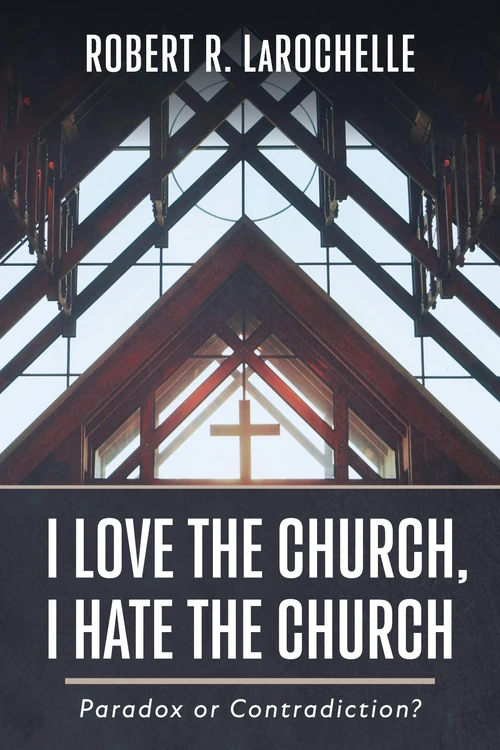
I Love the Church, I Hate the Church
Paradox or Contradiction?
- Church Leadership & Ministry
- Publisher: Resource Publications (Wipf and Stock)
- Published: 2022
FritzSearch.com earns a commission on purchases made through Bookshop.org links.
Publisher's Description
Is it possible to both love and hate the church at one and the same time? Bob LaRochelle has had a lot of experience with different churches. Raised a Roman Catholic, he was ordained a Permanent Deacon in that church. After a period of intense soul-searching, he left the Catholic Church and embarked on a career in ordained Protestant ministry, serving congregations in both the United Church of Christ and the Evangelical Lutheran Church in America. Through most of the same time, he also worked in the field of education, first as a teacher, and, for most of his career, as a counselor. Balancing personal experience with historical and theological background and reflection, I Love the Church, I Hate the Church combines factual information, theological analysis, and deep-seated personal feelings, all inviting the reader to take a look at the church, perhaps in ways that she or he never has before!
Endorsements (9)
“Prophetic and yet loving. Appreciative and yet challenging. Written with a pastor’s heart and an academic mind, this text invites pastors and congregational leaders to ponder how they can be more faithful to the gospel in our time. In a time of apparent decline, this text provides images of hope for a vital church of the future. A great book for group study as well as personal reflection. I commend it for church-leadership teams and councils.”
“LaRochelle delivers a personal Jacob-wrestling-with-the-angel story. . . . This honest confessional by one who has served as a pastor in multiple congregations of various denominations is a candid look at what the local church can become if its priorities are rooted in a sense of mission and discipleship.”
“LaRochelle points to both the excesses and shortcomings of the hierarchical, rule-based structure of the church while also pointing to the fact that much of humanitarian assistance comes from faith-based organizations. He . . . challenges the church to become more relevant and directly address the current challenges facing its congregants.”
“LaRochelle offers us a refreshingly honest glimpse into his lifelong relationship with the church and the internal conflict that helped to shape his journey. . . . This book is a perfect conversation starter as the reader explores their own personal relationship with God, religion, and the church.”
“In reading this book, I found myself reenergized as a Christian. It answered deep-rooted questions about the purpose of the church and what could be as opposed to its current realities. In many ways, I view this book as a call to action. . . . What are our priorities? What should they be? This book is timely and has the opportunity to serve as a catalyst for both personal and institutional change.”
“LaRochelle looks back on his lifework ‘navigating life within the institutional church.’ . . . What sets LaRochelle’s work apart is its pastoral focus, setting these large questions within the context of local pastoral life. Doing so . . . offers hope that solutions can be found that will renew Christian care in the Christian movement’s many intersecting American communities.”
“LaRochelle speaks for many clergy when he writes about his love-hate relationship with the church. . . . We have a book that explores the values and the challenges of the church, resulting in this love-hate relationship. As a mainline pastor (now retired), I recognize the realities described here. My hope is that readers will discern from the book a path forward so that the good news can be experienced by all who encounter the church.”
“LaRochelle clearly has a true love for the church. And as with any true love, he’s committed to making it work. But he is not blinded by its trappings, nor its dangers. Bob doesn’t see the church just in static absolutes but rather with the nuance that is necessary for the church’s survival and to reach its maximum positive impact in our society—and in ourselves. During these times, thinking like this is exactly what we need.”
“In this current time, when the tendency is to remain in a comfortable, like-minded cultural silo, . . . Bob invites his readers to explore the gray area of hard questions and encourages critical thinking about ideas of faith, belief, and community. He does this in a care-filled way that steers clear of judgement and offers a path to understanding that communities of faith are made stronger when approached, challenged, and understood thoughtfully.”
See something wrong on this page? Report a problem