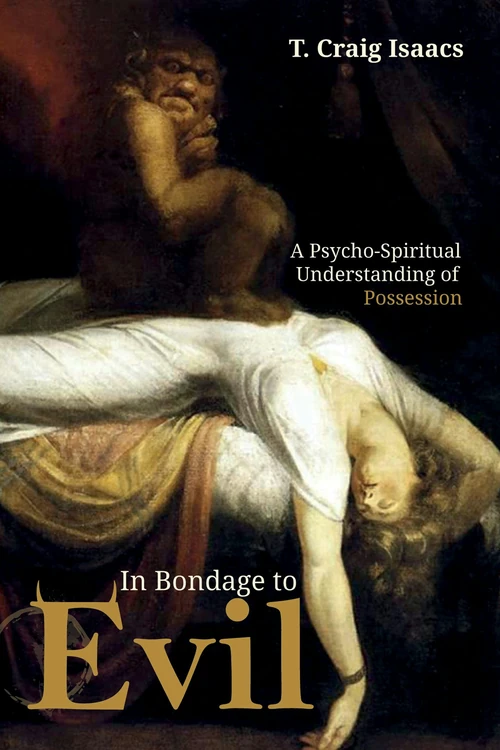
In Bondage to Evil
A Psycho-Spiritual Understanding of Possession
- Counseling, Grief & Mental Health
- Publisher: Pickwick Publications (Wipf and Stock)
- Published: 2018
FritzSearch.com earns a commission on purchases made through Bookshop.org links.
Publisher's Description
"Either you believe in possession or you do not. It is that simple, or at least that is how it often seems. However, the existence of the possession state in the human condition is not a matter of faith, it is a phenomenon that demands exploration." So begins the introduction of this psycho-spiritual exploration of involuntary (or demonic) possession. Avoiding the pitfalls of many such works, here is presented the inarguable fact that the possession state does occur and must be taken seriously if those who are afflicted are to be helped. The only argument that remains is the attributed cause of the state. Covering a comprehensive array of topics from the history of demonic possession to a present understanding of the phenomenology and intrapsychic dynamics of the possession state, the book also provides a depth of understanding with respect to the various forms of possession encountered throughout the world. Readers will also gain an understanding of the various cultural and psychological explanations for possession, including neuropsychological, hypnosis, and psychodynamic theories. It concludes with the examination of three cases of demonic possession and the presentation of diagnostic criteria to assist in differentiating possession from common forms of psychopathology.
Endorsements (1)
“Craig Isaacs has written a fascinating book. There is more to the universe than the merely physical. Alongside the everyday world of matter and energy is a world of mind and spirit—a complex world that is usually denied or ignored, often confusing and yet very real. In Bondage to Evil is the best book of its kind—a much needed, balanced, intelligent and well-ordered exploration both of the interactions between minds and matter and between minds and minds, and of the differences between psychological and spiritual causes of illness.”
See something wrong on this page? Report a problem