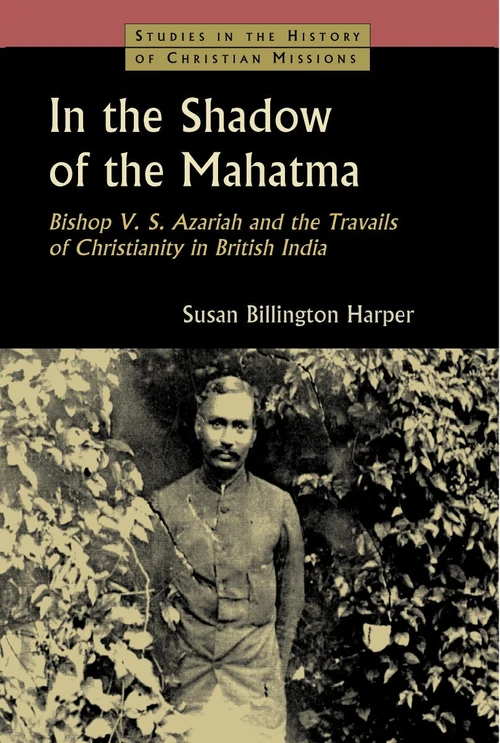
In the Shadow of the Mahatma
Bishop V. S. Azariah and the Travails of Christianity in British India
- History & Biography
- Publisher: Eerdmans
- Published: 2000
FritzSearch.com earns a commission on purchases made through Bookshop.org links.
Publisher's Description
This book presents the only critical study of the public life and legacy of V. S. Azariah (1874-1945), the first Indian bishop of an Anglican diocese and the most successful leader of rural conversion to Christianity in modern India. Harper carefully explores Bishop Azariah's work, including his attempts to redress racism and improve social conditions in India, and documents--for the first time anywhere--the previously unknown controversy between Bishop Azariah and the great Mahatma Gandhi.
Endorsements (1)
“Harper, a program officer for religious scholarship at the Pew Charitable Trusts, examines the relationship among Christianity, Hinduism, British colonialism, and early 20th-century Indian culture through the life of one man--Anglican Bishop V.S. Azariah (1874-1945). Azariah, the first Indian to be ordained a bishop in an Anglican diocese, spent much of his life leading a successful movement to convert South Asians to Christianity. Considered by Gandhi to be postcolonial Indians' "Enemy Number One," his theology was a mixture of British Christian imperialism and American Reformed theology. He was convinced that Christianity could transform Indian culture. As she tells Azariah's story, Harper illuminates the themes and conflicts that have shaped India's recent history: Gandhi, who considered all religions to have equal value, nevertheless associated Christianity with British imperialism and saw Hinduism as a potent cultural force for uniting anticolonial India. Azariah, on the other hand, considered Hinduism, particularly its caste system, to be responsible for most of the negative aspects of Indian culture. Part of Eerdmans' "Studies in the History of Christian Missions" series, this book is carefully researched and well written. Recommended for university and seminary libraries.”
See something wrong on this page? Report a problem