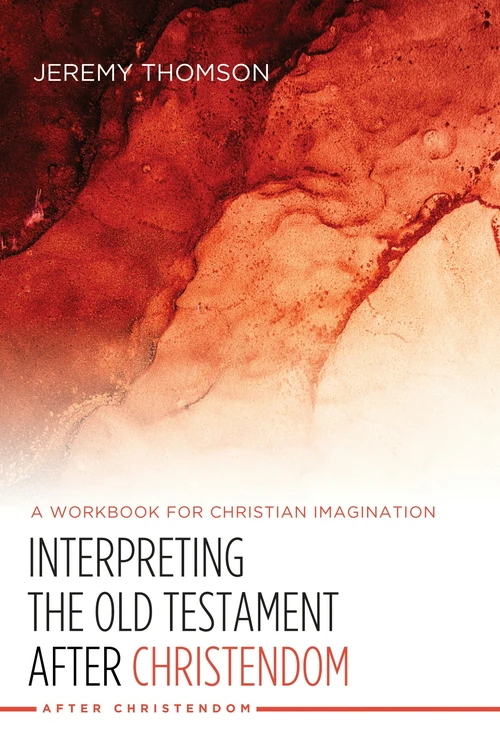
Interpreting the Old Testament after Christendom
A Workbook for Christian Imagination
- Biblical Studies & Commentaries
- Publisher: Cascade Books (Wipf and Stock)
- Published: 2021
FritzSearch.com earns a commission on purchases made through Bookshop.org links.
Publisher's Description
How would you describe the Old Testament? Offensive, violent, patriarchal, archaic; difficult, boring, obsolete? Many Christians don't bother with it anymore. Yet these ancient books were in Jesus' lifeblood, and they provided the thought-world of those early followers who wrote about him in what became the New Testament. This book challenges those stereotypes of Israel's Scriptures by exploring their significance in the apostolic writings and by demonstrating the importance of whole books for nuanced interpretation. It takes readers on a tour through four key books before considering the wider issues of interpretation that readers must consider in order to hear God's Spirit speaking afresh to a range of contemporary concerns, including racism and the environment.
Endorsements (3)
“This book serves as an excellent introduction to the Old Testament. Taking a ‘whole book’ approach to interpreting the Old Testament, Thomson proves himself a trusted and knowledgeable guide, leading us on a fascinating journey through this complex text. Along the way, he addresses difficult issues (divine violence, slavery, the mistreatment of women and racial minorities, environmental devastation, etc.) with clarity, integrity, sensitivity, and deep insight.”
“This book provides a wide-ranging and rich survey of an important subject. Whether introducing large issues such as the use of the Old Testament in the New, or illustrating nuanced approaches to reading narrative, or responding to theologically troubling passages in the book of Joshua, Thomson is a clear and able guide.”
“This enriching book is a ‘must-have’ for pastors, educators, seminarians, and regular readers of Hebrew Scripture. Thomson invites us to engage with whole books (not soundbites), renewing narrative theology whilst questioning past prejudices to re-envision our preaching, teaching, and daily discipleship.”
See something wrong on this page? Report a problem