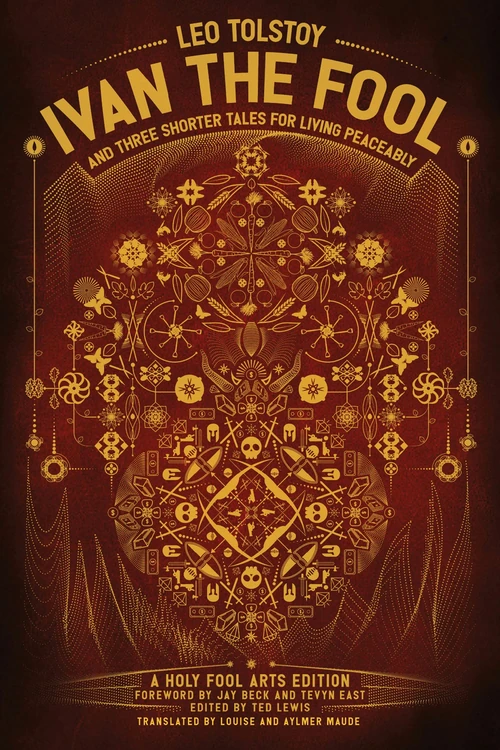
Ivan the Fool and Three Shorter Tales for Living Peaceably
- Fiction
- Publisher: Wipf and Stock
- Published: 2018
FritzSearch.com earns a commission on purchases made through Bookshop.org links.
Publisher's Description
The four classic tales in this volume illuminate Leo Tolstoy's radical orientation toward war and commerce, revealing his vision for a sustainable, peaceable world. The feature story, Ivan the Fool, presents an archetypal fool who works hard, cooperates with everyone, and manages to foil every attempt to cause his downfall. In the end, peasant life comes out on top, while the pillars of imperial Russian society topple down. Esarhaddon, King of Assyria explores a king's empathy-based revelation to end all violence; and A Grain as Big as a Hen's Egg playfully looks at the relationship between health, soil, labor, and food economies. Three Questions sums up Tolstoy's highest ideal of serving others in the present moment. Some may critique these stories as being too simplistic or too moralistic. But these tales have stood the test of time precisely because they entertain well while evoking universal truths that lift us above humanity's self-serving impulses.
Endorsements (4)
“A rare gem! This small book draws one into the sacred wisdom of the holy fool. Readers will savor kernels of life-giving insight, will find the soul smiling at truths it always knew but had forgotten, and will gain more power for the art of living rightly on this good Earth.”
“Ivan the Fool re-presents the ancient tradition of holy foolery for our postmodern age with tales of transgressive humor that disrupt power, scandalize the elite, and delight the masses. In Ivan’s world, you don’t have to pay to get in, but it’ll cost you your life to get out. Welcome to the upside down.”
“If Russia at feudalism’s dusk had heeded these pointed folktales from her literary son, she might not have had to endure so many impish terrors, from Stalin to Putin. Yet Tolstoy’s parables are just as relevant to toxic American militarism and plutocracy right now.”
See something wrong on this page? Report a problem