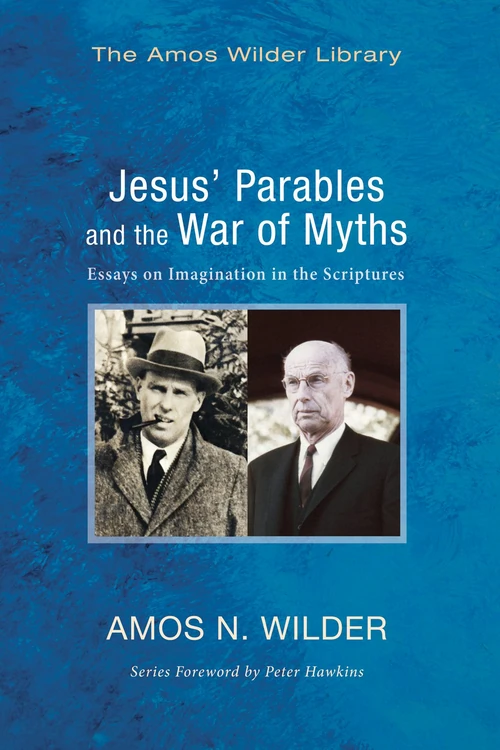
Jesus’ Parables and the War of Myths
Essays on Imagination in the Scriptures
- Biblical Studies & Commentaries
- Publisher: Wipf and Stock
- Published: 2013
FritzSearch.com earns a commission on purchases made through Bookshop.org links.
Publisher's Description
Amos Wilder is widely known as a pioneer of an indigenously North American approach to biblical interpretation which takes language to be an expression not only of psychological but also of sociological and concrete reality. Recording the history of his interest in eschatological language, Wilder further advances the literary and rhetorical criticism of Scripture, especially by alerting interpreters to the deeper modes of language and communication often overlooked. The essays in this volume, recaptured and edited to clarify their relatedness, are presented in two groups. The first group includes essays that situate the parables of Jesus within the broader context of the biblical narrative. The second is a series of essays dealing with the problem of adequately interpreting the "kingdom language" of Jesus. The book includes an essay in which Wilder chronicles and advances his long interest in the task of doing justice to the imaginative dimension of biblical language. Wilder develops a contemporary hermeneutic that combines the full range of historical-critical methods with approaches generated by various modern disciplines which attempt to do full justice to the interrelationship of language and reality. The preface by James Breech offers an exposition of the main features of Wilder's hermeneutic, together with a discussion of Wilder's understanding of parabolic narrative and Jesus' symbolics.
Endorsements (2)
“The achievement of Amos Wilder seems to me of the first order, and it is only proper that these essays should be published. Wilder was a pioneer in the reintroduction of imagination into scriptural interpretation. The rules that governed it had come to seem natural laws, and there are still those who treat them as such. But Wilder gathered together the best that was being thought and the best fruits of the modern hermeneutic imagination from wherever he found them, and has done his part to ensure that biblical scholarship will never again, among persons of good will, succumb to a sleep of reason and exclude the creative faculties that even scholars possess.”
See something wrong on this page? Report a problem