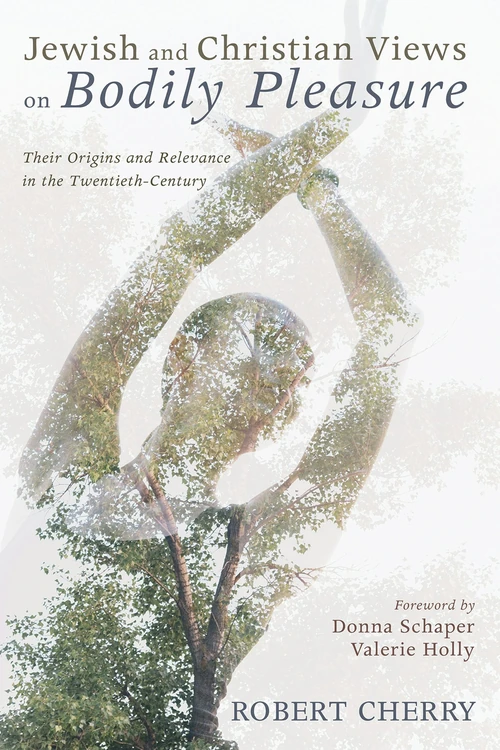
Jewish and Christian Views on Bodily Pleasure
Their Origins and Relevance in the Twentieth-Century
- World Religions
- Publisher: Wipf and Stock
- Published: 2018
FritzSearch.com earns a commission on purchases made through Bookshop.org links.
Publisher's Description
At the beginning of the Common Era, Jewish renewal movements, including Jesus' ministry, had similar views: embracing moderate ascetic behavior. Over the next three centuries, however, they moved in opposite directions. Christianity came to firmly privilege anti-pleasure views and female lifelong virginity while the Babylonian Talmud strongly embraced positive views on bodily pleasures and female sexuality. The books most distinguishing feature is that it is the first time that one book contrasts in detail the evolution of Christian and Jewish ascetic beliefs. More than other books, it systematically presents the critical role played by Babylonian Jewry: how they became the center of world Jewry with the virtual extinction of the Palestinian community; their decisive rejection, more so than the Palestinian community, of any ascetic tendencies; and how they came to migrate to the European continent during the medieval period. It concludes by relating how the eighteenth-century Hasidic movement and the nineteenth-century Irish devotional movement reestablished the contrasting views that helps explain why Jewish immigrants and not Irish Catholics came to dominate twentieth-century vaudeville.
Endorsements (5)
“Too few scholars of religion are brave enough to draw connections between the ancient and the modern worlds. Cherry’s exploration of the evolution of Jewish and Christian attitudes towards bodily pleasure demonstrates the true value of such work. Hopefully, others will follow his example.”
“The book is fascinating! As noted in the book, the topic of pleasure was central to the rabbis at the time of the beginning of the common era and writing of the Mishna. It was also extremely central to the earliest Christians from Jesus and on. I was deeply impressed by the primary and secondary sources. I loved reading about the contemporary implications and exploring the great contemporary relevance of this topic.”
“Robert Cherry takes us on a thought-provoking journey from Biblical times to the modern era, showing how religious teachings that were set out long ago continue to influence the ways Jews and Christians understand sexual pleasure. In his intriguing account, what happened in the ancient streets of Jerusalem echoes in the movies, songs and dance halls of early twentieth-century New York, where contemporary mass entertainment finds its origins.”
See something wrong on this page? Report a problem